 Comparison
Vermeil vs Solid Silver Cufflinks for Daily Wear
Last Updated: November 8, 2026
Quick Summary
Vermeil cufflinks are sterling silver covered with a thin gold layer, so their gold color can wear off where the cufflink rubs fabric, skin and moving parts. Solid silver cufflinks are silver all the way through, so scratches and tarnish change only the surface, and they handle daily wear better.
- Vermeil wears at the rim, back, post and hinged joints, where the thin gold layer rubs off.
- A heavier gold layer generally lasts longer before the silver base shows through.
- Look for the 925 stamp to confirm sterling silver and the karat mark for the gold layer.
- Solid silver can be polished repeatedly without revealing a different metal underneath.
- At daily wear, the mechanism, not the finish, usually determines when a pair needs service.
Table of Contents
- What Vermeil and Solid Silver Cufflinks Are Made Of
- Does Gold Vermeil Wear Off Over Time?
- Cufflink Construction and Where Failures Actually Happen
- Gold Vermeil vs Gold Filled: Where the Layer Differs
- Realistic Lifespan by Wear Frequency
- Caring for Sterling Silver Cufflinks and Keeping Them Bright
- Choosing the Pair That Fits How You Dress
- Frequently Asked Questions
Choosing between vermeil and solid silver cufflinks comes down to one question: which metal will still look right after years of daily wear? Vermeil gives you the warm gold look of solid gold over a sterling silver base, usually at a lower price. For a fuller side-by-side comparison of the two materials, see Sterling Silver vs Vermeil for Accessories. Solid silver offers the same bright metal all the way through. Both can last for decades, but they fail in different ways. Below, we explain how each metal is made, where wear actually shows up, and how to match the right pair to how often you wear it.
What Vermeil and Solid Silver Cufflinks Are Made Of
Vermeil and solid silver share a base, but they differ in the layer on top. Understanding that layer explains most of the durability question.
How gold vermeil is layered over sterling silver
Gold vermeil is a sterling silver piece covered with a layer of gold, usually 18k, applied by electroplating. The silver core gives the piece its shape and strength, and the gold layer gives it its color. Because the gold is a thin surface coating, its thickness matters more than almost anything else. A heavier gold layer generally lasts longer before the silver underneath starts to show.
Solid silver cufflinks have no coating to wear through. The entire piece is sterling silver, so a scratch or polish changes the surface but not the metal itself.
What the 925 stamp and karat mark tell you
Sterling silver is marked "925," meaning the piece is 92.5% pure silver (Buying Platinum, Gold, and Silver Jewelry). That number is the most reliable sign of a real silver base. Gold content is marked in karats, such as 18k (Buying Platinum, Gold, and Silver Jewelry). When you shop for vermeil, look for both marks: the 925 confirms the base metal, and the karat mark tells you about the gold layer. A piece with no marks deserves caution, whatever it is sold as.
Does Gold Vermeil Wear Off Over Time?
Yes, the gold layer on vermeil cufflinks wears off over time, but the useful question is where and how fast. On a cufflink, wear is not evenly distributed. It concentrates at four contact points: the outer rim of the face, the back of the face where it rests against the shirt cuff, the post or toggle that passes through the buttonhole, and any hinged or swiveling joint. Those are the spots that rub against fabric, skin, and each other every time the cufflink is fastened and removed.
The mechanism is straightforward. Electroplated gold is a thin surface layer, typically measured in microns. Each fastening cycle abrades a microscopic amount of that layer at the contact points. Over hundreds of cycles, the silver base begins to show through as a lighter, sometimes slightly yellowish patch against the surrounding gold. That is color loss, not structural failure. The cufflink still fastens, the silver core is intact, and the piece remains wearable, it simply looks uneven rather than uniformly gold.
Several factors accelerate the process. A rough or stiff shirt cuff, such as a heavy French-cuff cotton or a textured weave, abrades faster than a smooth poplin. Handling the cufflink by the face rather than the edges transfers skin oils and grit to the gold. Lotion, perfume, hair products, and hand sanitizer can dull or chemically attack the gold layer, especially alcohol-based sanitizers. Storing vermeil cufflinks loose in a drawer alongside keys or coins invites scratches that thin the gold prematurely.
Gold thickness, karat, and handling habits all affect how quickly the gold layer wears, so judge vermeil cufflinks by the thickness of the gold layer and the smoothness of the edges.
Cufflink Construction and Where Failures Actually Happen
Most cufflink problems have little to do with the metal itself. They happen at the mechanism, and that is where you should look when comparing pairs.
The two common fastenings are the whale back, which has a hinged bar that flips over the shirt's buttonhole, and the fixed post, which slides through the fabric and is held by a clasp or bar. Posts can bend if the metal is thin or if the cufflink is pulled hard during fastening. Hinges and clasps can loosen with repeated use. On vermeil, the joints are a particular weak point: if the gold layer covers a moving part, the constant flexing can wear it away faster than on the flat face.
When you examine any pair, check the solder joints, the strength of the post, and how smoothly the back closes. These details tell you more about long-term durability than the color or the stamp alone.
Gold Vermeil vs Gold Filled: Where the Layer Differs
Gold vermeil and gold-filled jewelry both have a gold outer layer, but the layer is different. Vermeil uses a thin electroplated coating. Gold-filled pieces have a much thicker layer of gold bonded to a base metal through heat and pressure. That bonded layer is far more durable and resists wear better over time.
For cufflinks, the practical trade-off is cost and expected life. Gold-filled costs more than standard plating but is built to last longer, while vermeil offers the gold look at a lower price. If you plan to wear cufflinks every day for many years, the thicker layer of gold-filled work is worth considering. If you wear them for weddings and formal events, vermeil is usually the more sensible choice. Check the product listing for the exact gold content and finish before buying.
Realistic Lifespan by Wear Frequency
Lifespan is not one number. It splits into two separate questions: how long the finish looks right, and how long the mechanism keeps working. Vermeil and solid silver behave differently on each, and wear frequency changes both. Because frequent wear tests both the finish and the mechanism, the same attention to lasting construction matters in other everyday pieces, as Gilded Girl Accessories suggests.
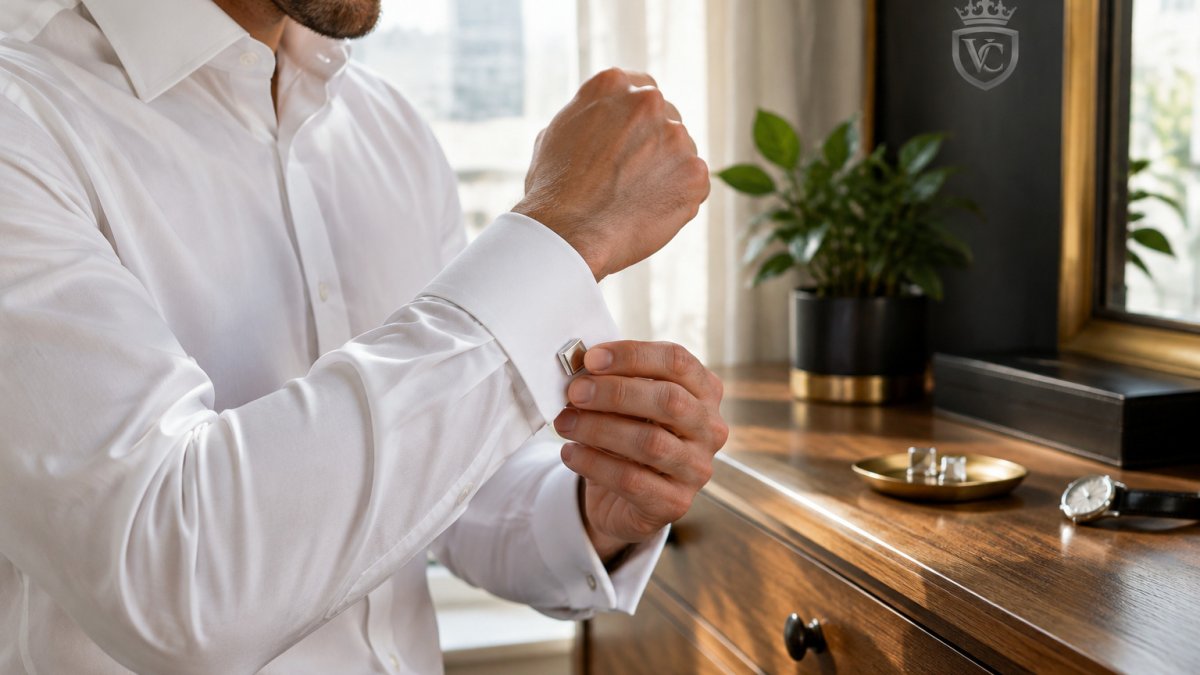
Occasional wear (a few times a year, formal events). Vermeil's gold color can last for many years when the contact points see relatively few abrasion cycles. Solid silver will slowly tarnish between wears but can be polished back to bright silver each time. Mechanical failure is rare at this frequency; the main risk is loss or damage in storage rather than wear.
Regular wear (several times a month). Light gold wear on vermeil at the rim and post can appear over time, with the face still largely gold. Solid silver develops a patina that some owners prefer and others polish away; either way the metal remains sound.
Daily wear. Vermeil can show visible color loss sooner, especially against a rough cuff, since moving joints flex constantly. Solid silver handles daily use well; it scratches and tarnishes but can be polished repeatedly without exposing a different metal underneath. At daily frequency, the mechanism, not the finish, usually determines when a pair needs service.
The ownership economics differ too. Worn vermeil can sometimes be replated by a jeweler, though replating adds cost. Solid silver can be polished, and because the metal is uniform, polishing does not reveal a different color.
The table below summarises how each wear frequency affects vermeil and solid silver cufflinks.
| Wear frequency | Vermeil | Solid silver |
|---|---|---|
| Occasional (few times a year) | Gold color can last many years | Tarnish between wears; polish to restore |
| Regular (several times a month) | Light gold wear at rim and post | Patina develops; metal stays sound |
| Daily | Color loss sooner; joints flex constantly | Scratches and tarnishes; polishes repeatedly |
| Mechanism at regular wear | Hinges and clasps begin to loosen | Loose hinge is still a repair |
Caring for Sterling Silver Cufflinks and Keeping Them Bright
Simple habits extend the life of both metals. Store cufflinks in a dry, closed box or pouch, away from humidity. Remove them before swimming, showering, or using cleaning products, since water and chemicals can dull the finish. Apply perfume and lotion before dressing so residue does not build up on the metal.
For sterling silver, use a soft, dry polishing cloth to remove tarnish. For vermeil, avoid abrasive polishes, which can rub through the gold layer. Step-by-step instructions are in How to Clean Gold Vermeil Jewelry: Complete Guide. Wipe gently with a soft cloth and keep harsh chemicals away from the surface. Regular, gentle cleaning does more than occasional aggressive polishing.
Choosing the Pair That Fits How You Dress
Your choice should follow your wardrobe and your schedule. If you wear cufflinks mainly for formal occasions such as weddings, galas, and anniversaries, a vermeil pair gives you warm gold at a sensible price. If you wear them to the office several times a week, solid silver is the more durable option.
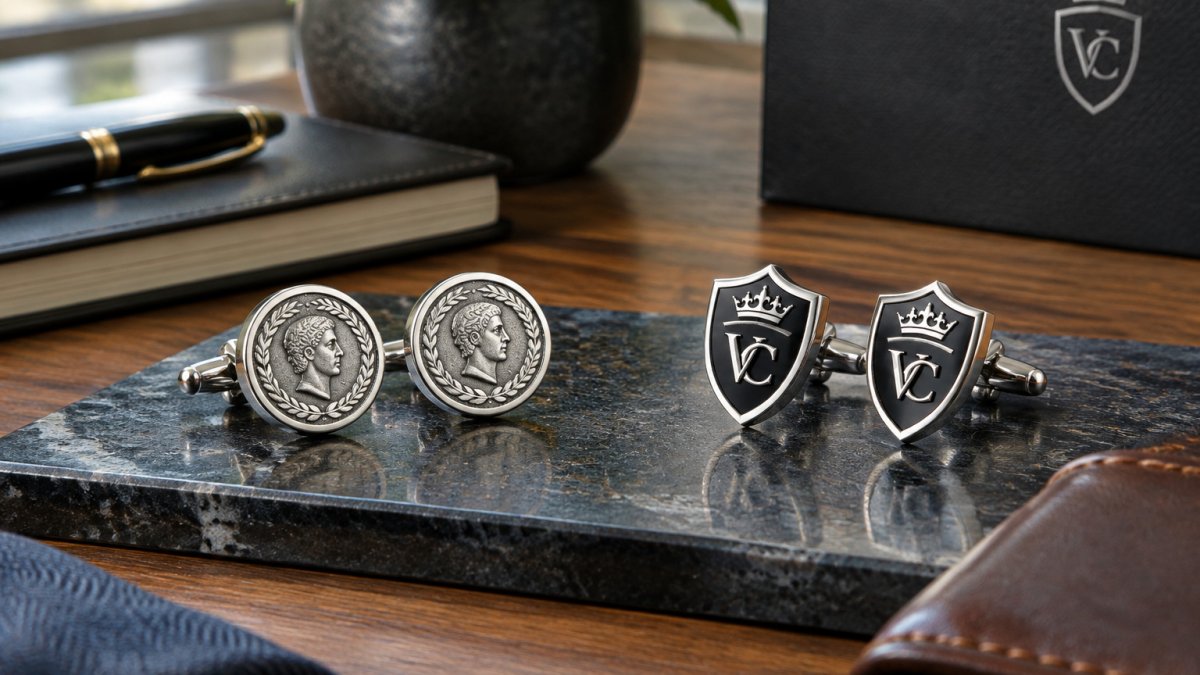
VALCREST™ offers three pieces in this range. The Executive Crown Sterling Silver Cufflinks, priced at $229.00, come in polished silver or with 18k gold plating and suit business and formal attire. The Heritage British Shilling Cufflinks, at $249.00, pair authentic vintage silver shillings with an 18k gold vermeil finish, and each pair is individually numbered. The Founder's Edition Shield Cufflinks, at $329.00, combine sterling silver with 18k gold vermeil in an architectural shield design and are limited in availability. Start with how often you wear them, and the right metal will follow.
Frequently Asked Questions
Is vermeil better than sterling silver?
Neither is better across the board. Sterling silver is solid 925 silver throughout, so its wear is uniform and it can be refinished by polishing. Vermeil is sterling silver with a thick gold layer on the surface, typically 18k gold, which gives a warmer color and a gold-toned face. Vermeil costs more than plain sterling silver but usually less than solid gold. For a warm metal look on formalwear, vermeil works well; for maximum long-term durability of the base metal, solid sterling silver is the simpler choice.
How long will vermeil cufflinks last?
Lifespan depends mostly on how often they are worn and how they are handled. Occasional wear for weddings and formal events can help a vermeil finish stay looking good. Daily wear against cuff fabric, with friction at the back and edges, wears the gold layer faster. The silver base stays intact as long as the cufflinks are not heavily scratched or exposed to harsh chemicals. Cufflinks worn a few times a year are unlikely to show meaningful gold loss in the near term.
Can gold vermeil cufflinks be worn every day?
They can be worn daily, but the gold layer will wear faster than on occasional-wear pieces. Contact points such as the back of the face, the swivel back, and the edges are most exposed to abrasion from shirt cuffs. If you wear cufflinks every day, choose a vermeil pair with a thicker gold layer, avoid wearing them during exercise or in water, and remove them before handling chemicals or cleaning products. Solid sterling silver handles daily wear more predictably, since there is no gold layer to rub through.
Does 14k gold vermeil turn green?
Vermeil over sterling silver should not turn green in the way cheap base-metal jewelry can, because the base is 925 sterling silver. However, if the gold layer wears through, the silver underneath can tarnish dark or dull, and sweat or skin chemistry can cause discoloration over time. Keeping the cufflinks dry, wiping them after wear, and storing them in a pouch limits this. If discoloration appears, a jeweler can assess whether the piece needs polishing or replating.
How should you clean and store vermeil and silver cufflinks?
Wipe both vermeil and solid silver cufflinks with a soft, dry cloth after each wear to remove skin oils and moisture. Polish sterling silver with a dedicated silver cloth as needed. For vermeil, use only a soft cloth and avoid abrasive polishes, which can thin the gold layer. Store each pair in a separate lined pouch or compartment so the faces do not scratch one another, and keep them away from humidity, perfume, and cleaning products.