 Comparison
Cufflinks vs Shirt Studs for Formal Dress Shirts
Quick Summary
Cufflinks and studs are the small metal fasteners that close a formal shirt where a button would normally go. Cufflinks hold French cuffs together, while studs hold the front panel closed. Together they signal a deliberate, well-chosen outfit for weddings, galas and business dinners.
- Cufflinks pass through the buttonholes of French cuffs, so a shirt without cuff buttonholes cannot take them.
- Most formal shirt fronts use between four and six studs, and the eyelet count is set by the shirt.
- Most dress-shirt eyelets take studs in the 10mm to 12mm range, but sizing varies, so measure first.
- Sterling silver is 92.5 percent pure silver; vermeil is sterling silver with a layer of gold.
- Set the shirt front first, then fasten the cuffs, so the jacket sleeves sit correctly.
Table of Contents
- What Cufflinks and Studs Do on a Formal Shirt
- Cufflinks vs Dress Studs: Types, Fastening and Compatibility
- Choosing Studs for Different Shirt Fronts
- Metal Finishes Compared: Sterling Silver, Gold Plate and Vermeil
- How to Wear Tuxedo Cufflinks and Studs, Step by Step
- Matching Cufflinks and Studs for a Wedding or Gala
- Pricing, Care and Choosing Your First Pair
- Frequently Asked Questions
What Cufflinks and Studs Do on a Formal Shirt
Last Updated: November 22, 2026
Cufflinks and studs are the small metal fasteners that close a formal shirt where a button would be ordinary. Once you have chosen silver, the safe at-home polishing steps explain how to keep the pair looking good. Cufflinks hold the cuffs of a French-cuff shirt together, and studs hold the placket or front panel closed on a dress shirt. Used together, they signal that the outfit was chosen with care, which is why they matter at weddings, galas and business dinners.
Many men wear cufflinks only a few times a year, so the choice matters more than it might seem. A good pair should sit flat against the cuff, close easily and look right under a jacket sleeve. The same logic applies to studs, which must sit evenly along the shirt front. Getting both right makes an outfit look deliberate.
Cufflinks vs Dress Studs: Types, Fastening and Compatibility
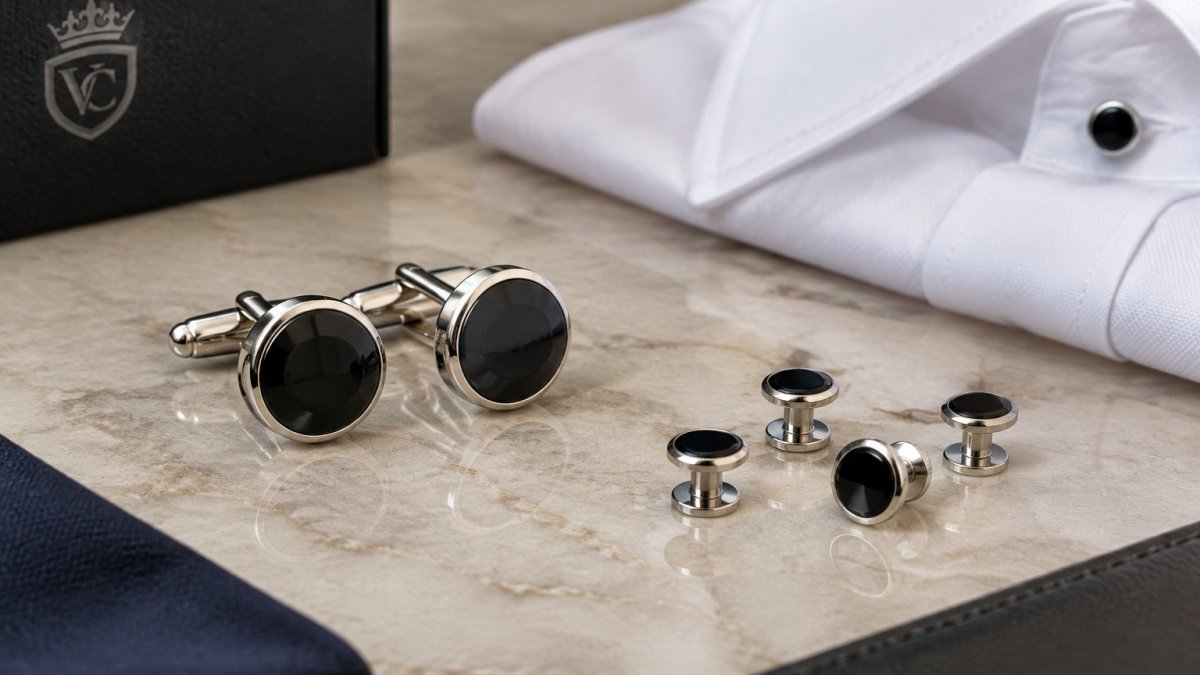
Cufflinks and dress studs solve different fastening problems, so they are not interchangeable. Cufflinks pass through the buttonholes of French cuffs and are usually fastened with a bar or a post, while dress studs are small buttons pushed through the eyelets of a formal shirt front. Cufflinks are the more common accessory for daily formal wear, and studs are most often seen with tuxedo shirts.
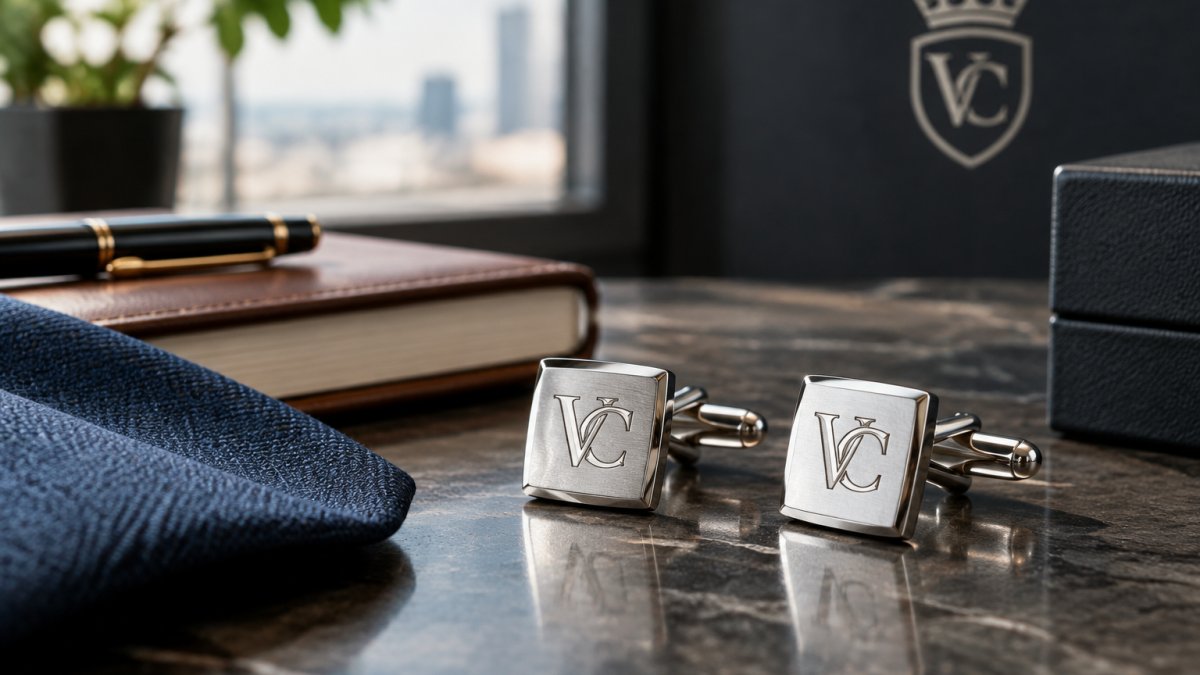
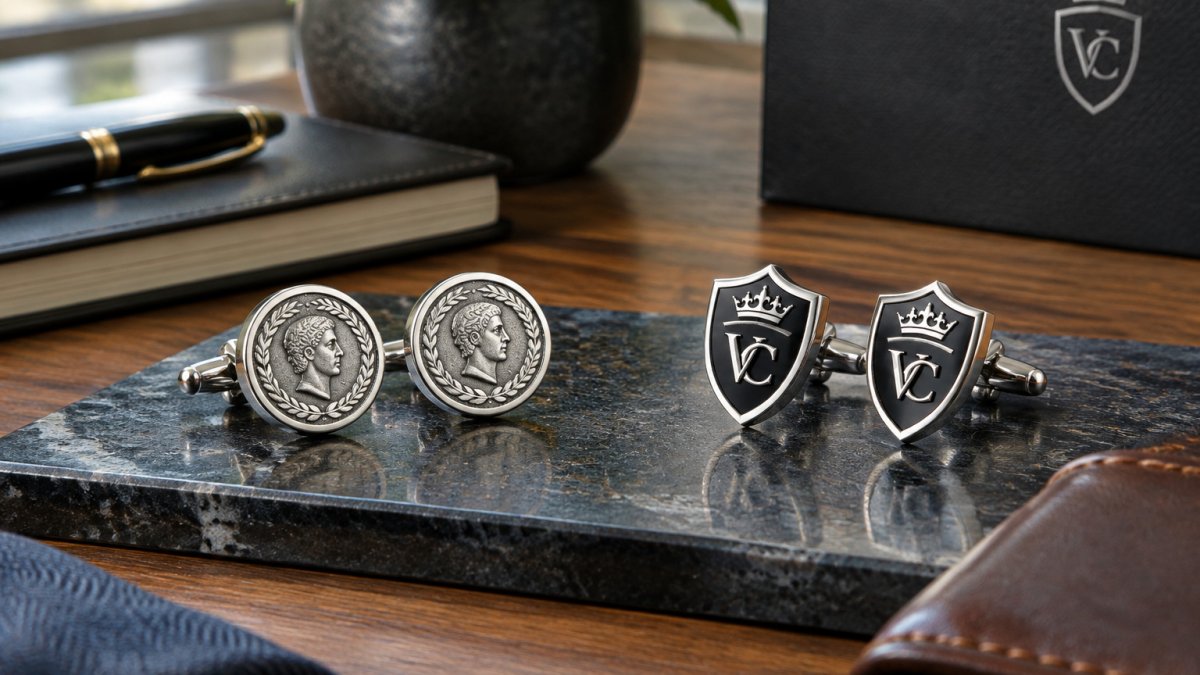
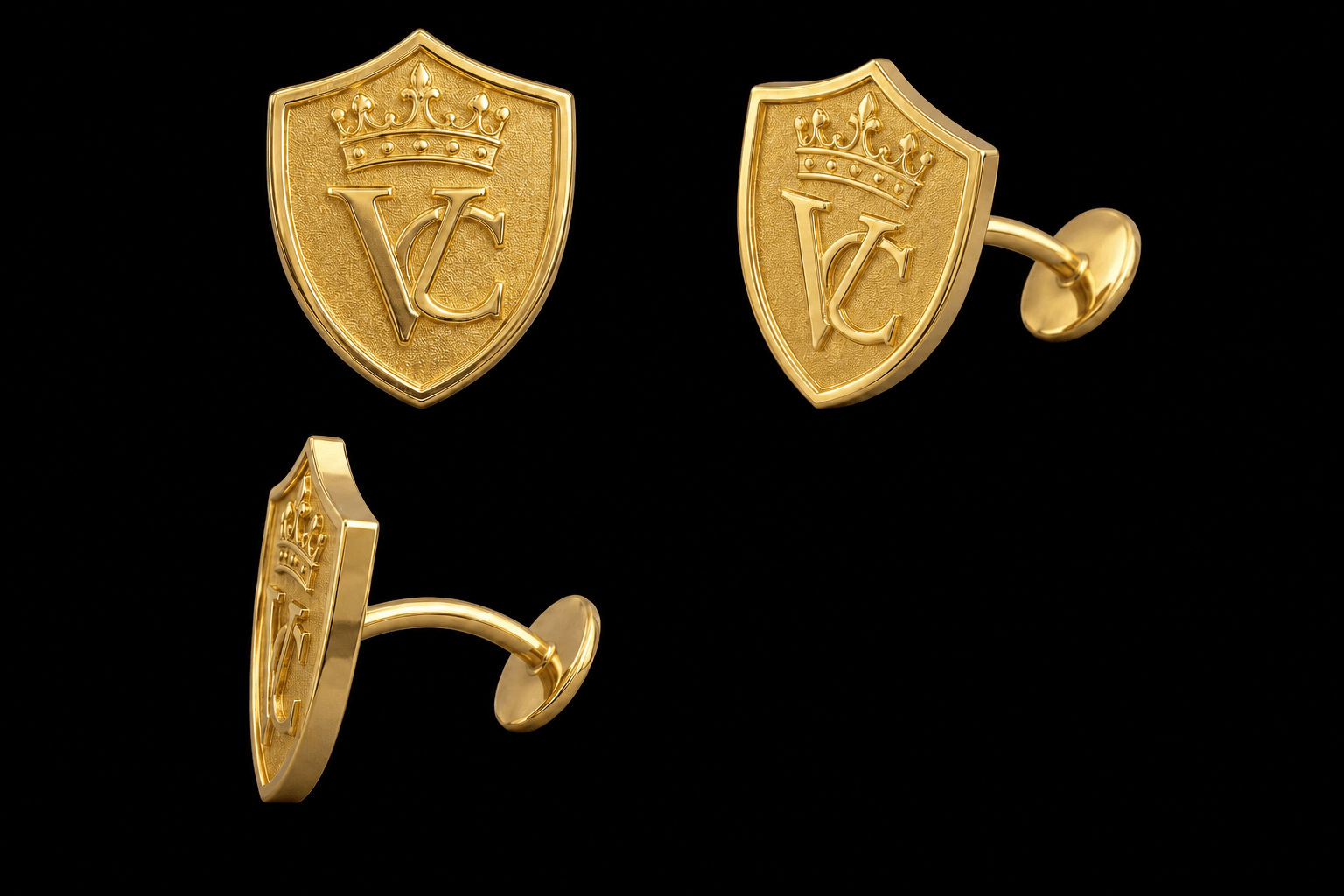
Compatibility depends on the shirt. A French cuff needs a cufflink, and a shirt without cuff buttonholes cannot take one. Check the shirt before you buy. The Executive Crown Sterling Silver Cufflinks use a whale back closure, and the Founder's Edition Shield Cufflinks use a fixed-post fastening.

Choosing Studs for Different Shirt Fronts
Stud choice starts with the shirt front, not the stud. Formal shirts come in two main front styles, and each takes a different approach.
A pleated front has a stiffened panel with visible folds and a row of eyelets down the center. The pleats add structure, so the studs sit slightly recessed and the front stays crisp under a jacket. A plain front has a flat panel with eyelets set directly into the fabric. It looks cleaner and more modern, but it shows every stud position, so alignment matters more.
Count the eyelets before you buy. Most formal shirt fronts use between four and six studs, and the count is set by the shirt, not the stud. A shirt with five eyelets needs five studs; buying a set of four leaves a gap at the top or bottom. Check the shirt's eyelet count and spacing first, then match the set.
Eyelet diameter is the next check. A stud that is too narrow will slide through and pull the front out of line; one that is too wide will not pass through at all. Most dress-shirt eyelets are sized for studs in the 10mm to 12mm range, but sizing varies by maker, so measure the eyelet opening with a ruler if you are unsure. A flat, low-profile face keeps a plain front smooth under a jacket, while a slightly domed face reads better on a pleated front because the pleats already add texture.
Attachment style matters for how the stud sits. A fixed post with a back plate is the traditional design and holds firmly, but it can be fiddly through a stiff eyelet. A snap or spring-loaded back is faster to fasten and easier to remove at the end of the night. A bar back lies flattest against the fabric and is the least likely to catch on a jacket lining.
Watch out: a stud that is too thick will not sit flush on a plain front and will show as a bump under a jacket. Test the stud through the eyelet before the event, not in the mirror five minutes before you leave.
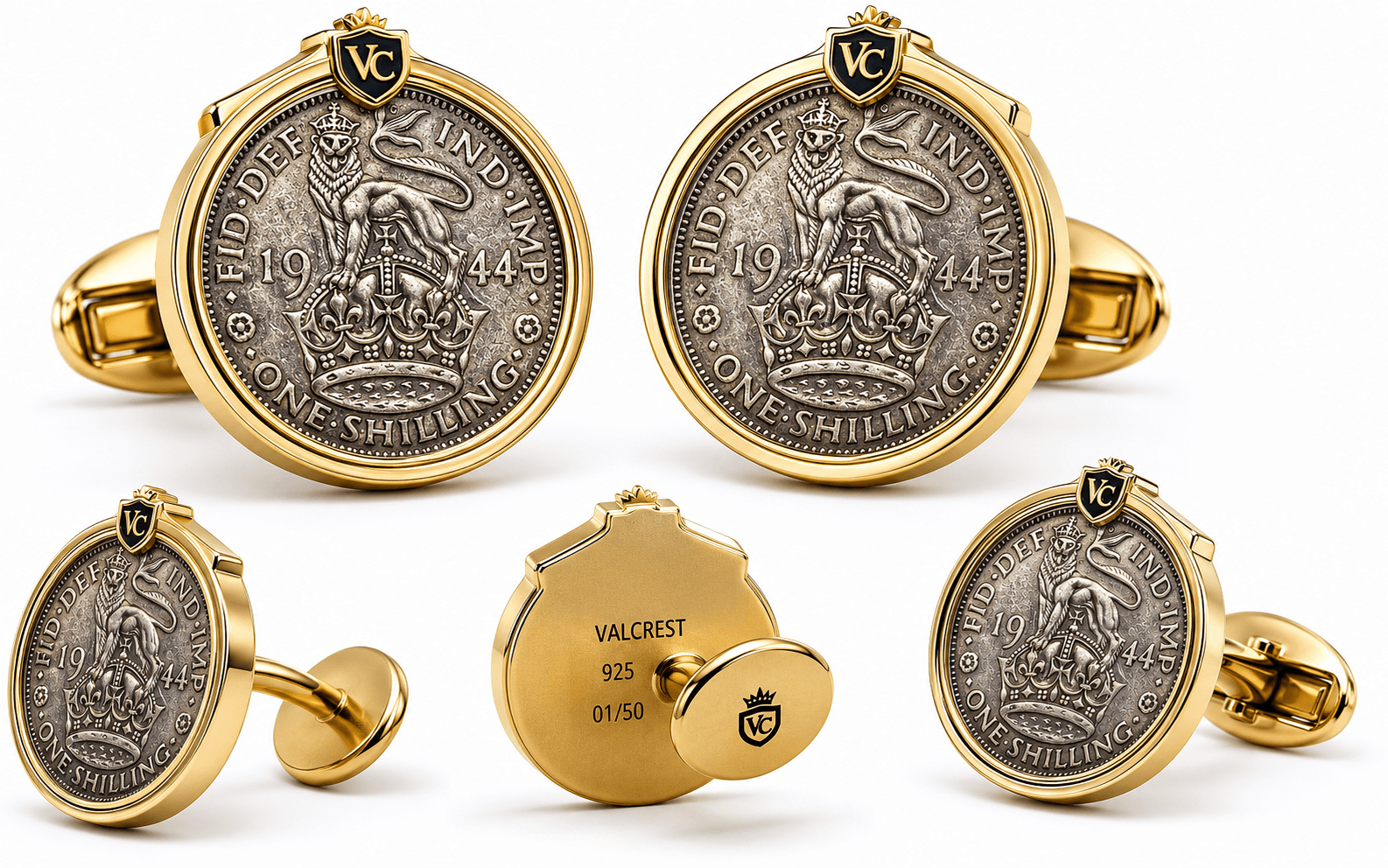
The Heritage British Shilling Cufflinks have a 26mm face and a fixed-post backing.
Metal Finishes Compared: Sterling Silver, Gold Plate and Vermeil
The finish decides how a pair looks, how long it lasts, and how much care it needs. The three finishes used in most formal cufflinks and studs behave very differently.
Sterling silver is an alloy that is 92.5 percent pure silver, with the remainder usually copper. It has a bright, cool tone.
Vermeil is sterling silver with a layer of gold.
A side-by-side view:
- Appearance: silver is cool and bright; plate and vermeil are warm gold.
- Durability: vermeil outlasts plate; sterling silver outlasts both in terms of re-polishing.
- Care: silver needs polishing; vermeil needs a soft cloth and should avoid harsh cleaners; plate needs the gentlest handling because the layer is thin.
- Cost: plate is the least expensive, sterling silver sits in the middle, and vermeil is the highest of the three.
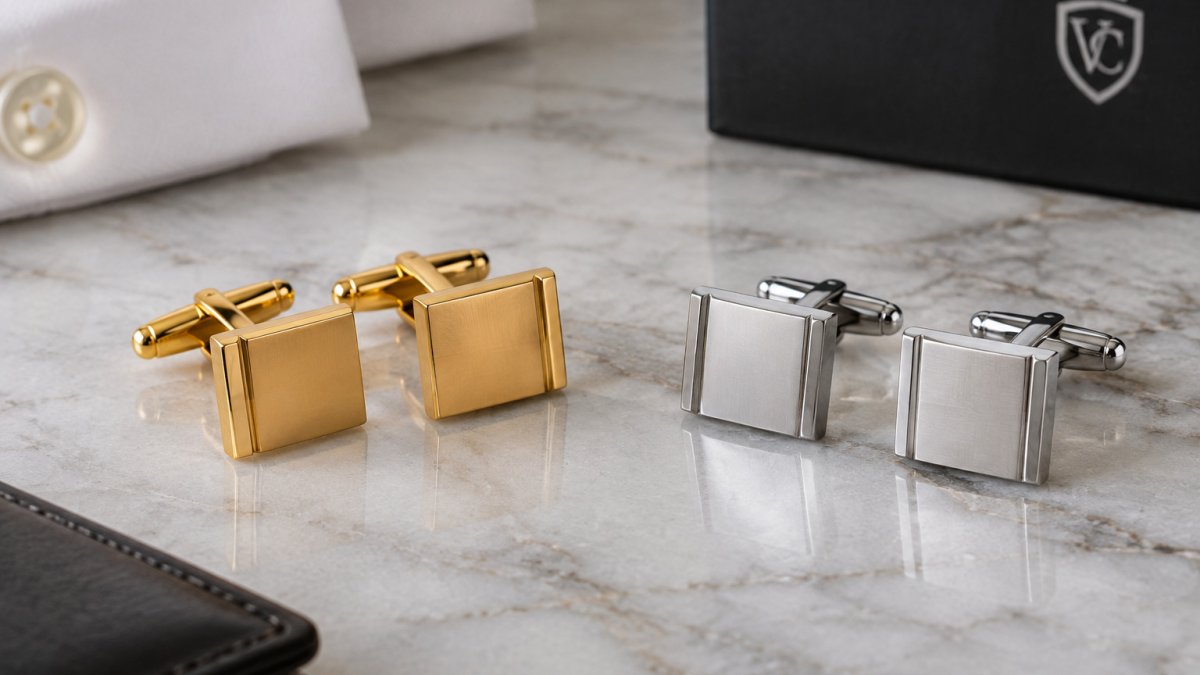
The VALCREST™ range uses these finishes deliberately. The Executive Crown Sterling Silver Cufflinks come in polished silver or with 18k gold plating, while the Founder's Edition Shield Cufflinks use 18k gold vermeil over sterling silver. For a longer-lasting gold tone, vermeil is the better choice. For a more subtle look, polished silver is hard to beat. Those who want a gold look for everyday wear may also find the vermeil versus solid silver comparison for daily wear useful.
The three finishes behave differently in appearance, durability, care and cost, as summarised below.
| Finish | Key difference | Care |
|---|---|---|
| Sterling silver | Bright, cool tone; 92.5 percent pure silver | Needs polishing |
| Vermeil | Sterling silver with a layer of gold | Soft cloth; avoid harsh cleaners |
| Gold plate | Warm gold; thinnest layer, least expensive | Gentlest handling |
How to Wear Tuxedo Cufflinks and Studs, Step by Step
Wearing tuxedo cufflinks and studs takes only a few minutes once you know the order. Start with the shirt on and buttoned at the collar. Then follow these steps:
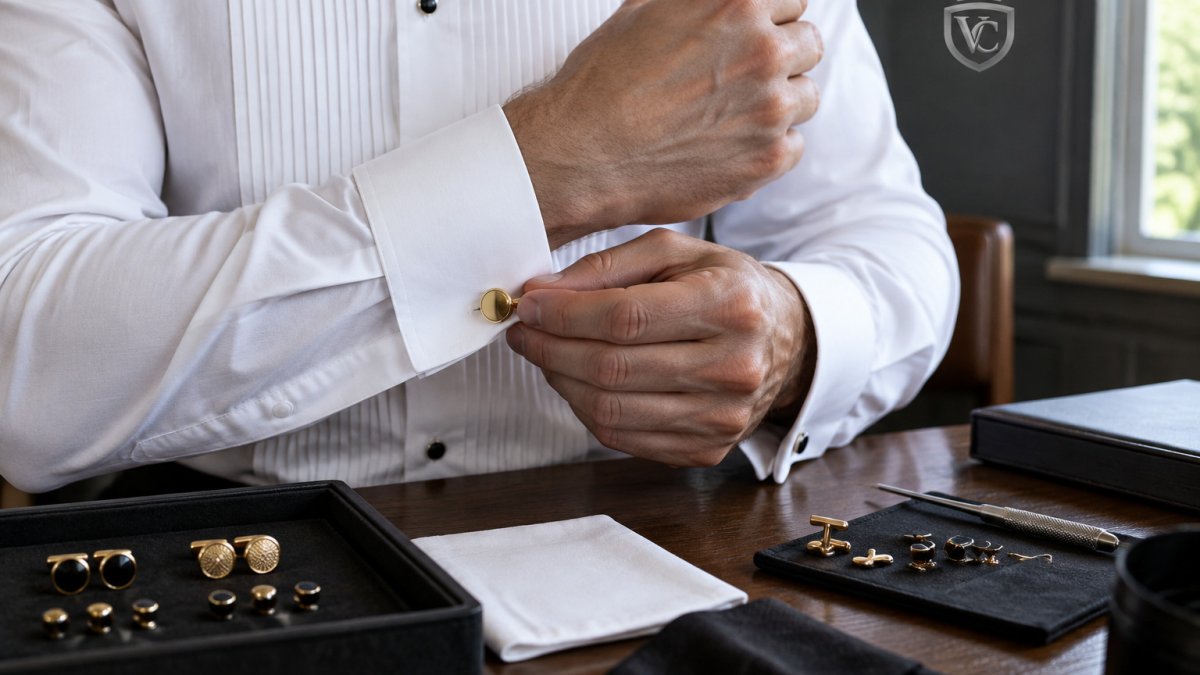
- Slide the cuff through the sleeve so the buttonholes line up.
- Pass the cufflink through both buttonholes, from the front of the cuff to the back.
- Close the back of the cufflink, or push the post into place, so it sits flat.
- Fasten the front panel with studs, starting from the middle and working outward.
- Check that the cufflinks and studs sit straight before putting on the jacket.
A common mistake is to fasten the cuffs before the shirt front is set. Set the front first, then the cuffs, so the jacket sleeves sit correctly. Wear a jacket to test the fit, since cufflinks that look right on the table can show under a sleeve.
Matching Cufflinks and Studs for a Wedding or Gala
Matching cufflinks and studs make an outfit look coordinated. Choose one metal finish for both pieces, such as silver with silver or gold with gold, and keep the style consistent. For a wedding, a simple polished silver set suits a classic black-tie look, while a gold vermeil set adds warmth to a daytime or anniversary event.
Gift-givers often pick a matching set for a groom or a special occasion. For more gift and matching ideas for weddings and galas, see the best cufflinks for wedding gifts. Buying a set in one finish keeps the outfit cohesive and avoids clashing tones. Consider the event dress code before you choose.
Pricing, Care and Choosing Your First Pair
Prices depend on the metal and design. The Executive Crown Sterling Silver Cufflinks are priced at $229.00, the Heritage British Shilling Cufflinks at $249.00, and the Founder's Edition Shield Cufflinks at $329.00. The Executive Crown Cufflinks include a presentation gift box, and the Heritage British Shilling Cufflinks include a premium presentation box.
Cufflinks and studs are easy to overlook, yet they shape how a formal outfit looks. VALCREST™ makes pieces in sterling silver and vermeil for men who want a refined finish that lasts. Explore the collection to find a pair that suits your next formal occasion.
Frequently Asked Questions
What are cufflinks and studs for?
Cufflinks fasten the French cuffs of a dress shirt, which have no buttons and instead are folded and joined with a pair of links. Dress studs replace the buttons on a formal shirt front, typically a pleated or plain bib. Together they give a tuxedo or formal shirt a finished, coordinated look. Cufflinks run from roughly $229.00 to $329.00 per pair in the VALCREST collection, .
Should studs match cufflinks?
They do not have to match exactly, but a coordinated set looks more deliberate. Matching the metal finish, such as sterling silver with silver studs or gold vermeil with gold studs, is the simplest way to keep the look consistent. Mixing a silver cufflink with a gold stud is acceptable on some shirts, but the cleaner choice for formal events is one metal throughout.
Can you wear cufflinks without shirt studs?
Yes. A shirt with a plain or fly front can be worn with cufflinks alone, and many business-formal shirts have buttons down the front. Shirt studs are needed only on shirts designed for them, such as a pleated tuxedo shirt with a stud placket. Wearing cufflinks with a buttoned front is a common and appropriate choice for a dress shirt at a wedding or evening event.
How many studs does a tuxedo shirt need?
Most tuxedo shirts with a stud front use three studs: one at the top of the placket near the collar and one in each of the two lower positions, though the exact count depends on the shirt's design. Check the shirt's stud placement before buying a set, and confirm the number of studs in the set you choose. Matching cufflinks are a separate pair, usually two per shirt.