 How-to
How to Polish Silver Cufflinks Safely at Home
Last Updated: November 11, 2026
Quick Summary
To polish silver cufflinks safely, start with a dry microfiber or soft cotton cloth, since it removes light tarnish without harming the metal. Only move to a baking soda paste for solid sterling pieces that still look tarnished. Skip liquids for plated, enamel, or gemstone pieces.
- Check for a 925 or STERLING stamp to identify solid silver before cleaning.
- Use a dry cloth first and stop as soon as the tarnish lifts and shine returns.
- Mix one tablespoon of baking soda with a few drops of water for a paste.
- Rinse baking soda paste thoroughly and dry every crevice completely.
- Never use liquids on enamel, stones, pearls, or glued parts.
Table of Contents
- Why Polishing Silver Cufflinks Needs a Careful Approach
- Check Your Silver Type and Finish Before You Clean
- How to Polish Silver Cufflinks Safely with a Polishing Cloth
- How to Polish Silver Cufflinks Safely with Baking Soda
- How to Polish Silver Cufflinks Safely with Foil
- How to Clean Silver Without Polishing, and Methods to Avoid
- Keeping Your VALCREST Cufflinks Bright Between Polishes
- Frequently Asked Questions
Why Polishing Silver Cufflinks Needs a Careful Approach
Silver cufflinks can lose their shine over time, but a rushed clean can scratch the metal, wear away a finish, or damage the parts that hold them together. Learning how to polish silver cufflinks safely at home protects both the look and the value of your pieces. The right method depends on exactly what your pair is made from.

Most people reach for whatever is under the sink. That is where mistakes start. Harsh abrasives, strong chemicals and hard scrubbing can all leave marks that never fully come out. Gentle, patient methods almost always give better results.
Cufflinks are also small and easy to lose. A dropped pair can bend a post or loosen a hinge. Keep a soft cloth on the table, work over a towel, and handle each piece one at a time.
- Use soft materials, not scouring pads or paper towels
- Work slowly and check your progress often
- Keep small parts away from the sink drain
Check Your Silver Type and Finish Before You Clean
The right method depends on what the cufflink is made of and how it is finished. Work through the checks below in order, and stop at the first one that tells you to change your approach.
Start with the hallmark. Solid sterling silver is usually stamped "925" or "STERLING" on the back, the post, or the inside of the back plate. A missing mark does not prove a piece is plated, but it means you should treat it as unknown and use the gentlest method.
Next, look at the edges and high points. Silver-plated and vermeil pieces often show a different metal color where the plating has worn thin, usually on the edges of a crown design, the rim of a coin, or the tips of a raised emblem. Bright copper-colored or brassy spots at these points mean the base metal is showing. Once that happens, do not use any abrasive or soaking method, because each pass removes more of the surface.
Then identify intentional darkening. Many sterling cufflinks have oxidized detail that is meant to stay dark, such as the recessed lines of an engraved initial, the lettering on a coin, or the grooves of a textured pattern. This darkening is part of the design. Polishing it away with a cloth or paste will leave the raised areas bright and the recesses flat, which looks like wear. Use a cotton swab and a dry cloth to brighten only the raised surfaces, and leave the recesses alone.
Finally, check the surface finish itself. A high-polish finish shows fine scratches and haze quickly, so use only the lightest pressure. A brushed or satin finish has a directional grain. Rub along that grain only, because cross-grain strokes will leave visible lines. A matte or sandblasted finish should not be polished at all, since polishing will make it shiny and uneven. Clean these with a soft dry brush.
Here is a simple decision path. If the piece is stamped 925 with no plating wear and has a polished or brushed finish, you can use a dry cloth first and move to the baking soda method only if tarnish remains. If the piece is vermeil, silver-plated, or shows worn spots, use a dry cloth only. If it has enamel, stones, pearls, or glued parts, skip all liquids. If the finish is matte, sandblasted, or includes intentional darkening, clean only the raised metal with a dry brush.
Watch out: rubbing a textured or oxidized area until it looks uniform removes the detail that gave the cufflink its character, and that loss cannot be reversed.
Before cleaning, the article suggests checking the metal, finish, and any intentional darkening, which points to different methods.
| Piece type | Safe method | Avoid |
|---|---|---|
| Solid sterling, stamped 925 | Dry cloth, then baking soda if tarnish remains | Abrasive pastes |
| Vermeil or silver-plated | Dry cloth only | Liquid and abrasive methods |
| Enamel, stones, pearls, or glued parts | Dry cloth or dry brush only | Any liquid |
| Matte or sandblasted | Soft dry brush | Polishing |
| Oxidized or engraved detail | Brighten raised areas only | Polishing recesses |
How to Polish Silver Cufflinks Safely with a Polishing Cloth
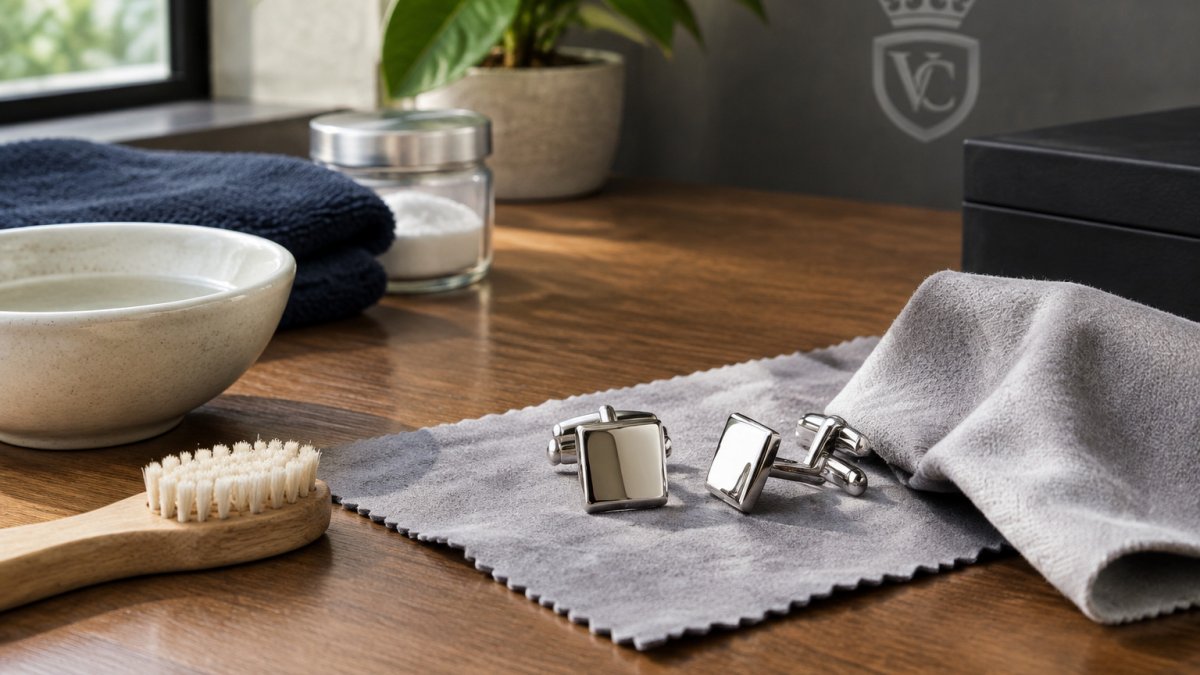
A dry polishing cloth is the safest way to clean silver cufflinks, and it works well for light tarnish. Use a clean microfiber or a soft cotton cloth made for silver. Avoid the rough cloths found in cheap kitchen supplies.
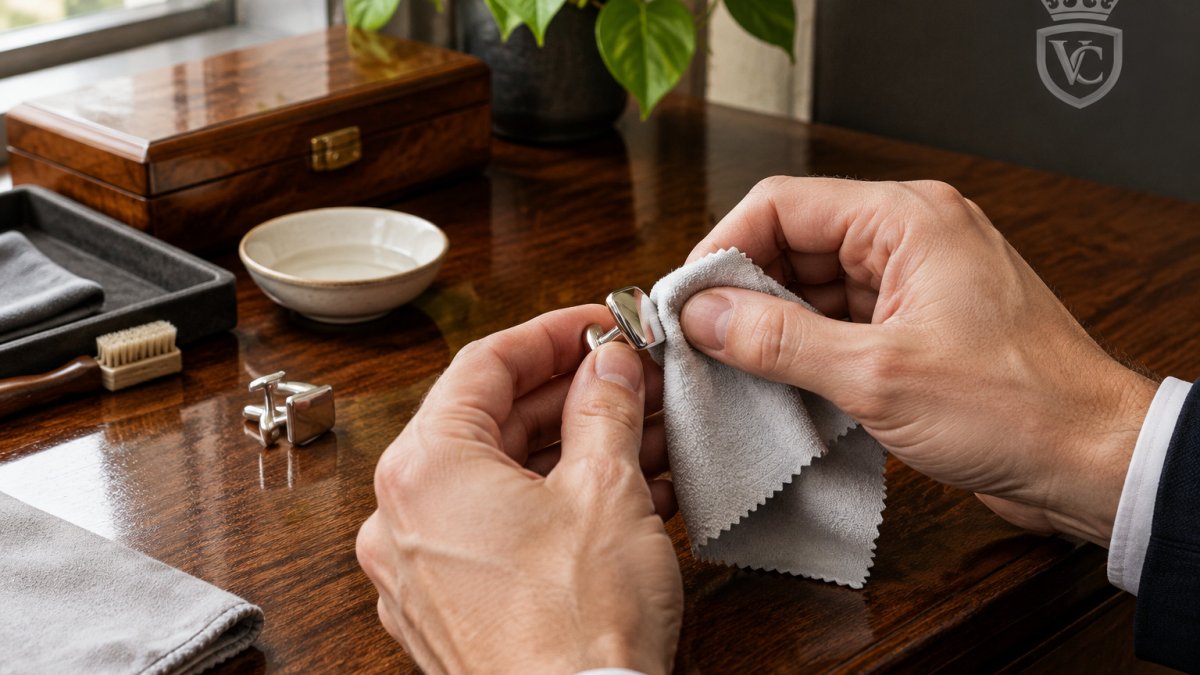
Follow these steps:
- Lay the cufflinks on a clean towel so they do not roll off the table.
- Fold the cloth so you have a clean, flat surface to work with.
- Rub each piece in gentle, straight strokes, following the grain of any brushed finish.
- Turn the cufflink and polish the back, the edges and the crevices.
- Stop when the tarnish lifts and the shine returns. More rubbing does not help.
A dry cloth after each wear helps keep silver bright for longer.
A quick wipe after each wear does more than a deep clean once a year.
Cleaning Cufflinks with Enamel or Gemstones
Pieces with enamel or stones need extra care. Do not soak them, and never use liquid polish on the enamel. Keep the cloth dry and wipe only the metal parts. Brush gently around the stone settings with a soft, dry brush so no moisture gets trapped under the stone.
If you see loose stones or cracked enamel, stop cleaning. Have a jeweler check the piece first.
How to Polish Silver Cufflinks Safely with Baking Soda
For tarnish that a dry cloth cannot remove, a baking soda paste is a common home method. It is mild enough for most solid silver pieces when used carefully. Skip this method for vermeil, silver-plated pieces, enamel, or gemstones.
Here is the process:
- Mix one tablespoon of baking soda with a few drops of water to make a thick paste.
- Dip a soft cloth or a soft toothbrush into the paste.
- Rub the silver gently, using light pressure and short strokes.
- Rinse the piece under lukewarm water to remove all the paste.
- Dry it completely with a clean, soft cloth before you store it.
Work in a shallow bowl so a cufflink does not slip down the drain. Rinse thoroughly, because leftover residue can dull the surface over time. Dry every crevice, since trapped water can cause spotting.
How to Polish Silver Cufflinks Safely with Foil
The aluminum foil method uses a chemical reaction to lift tarnish off silver. It works on solid silver but can be hard on finishes and can leave a dull surface if overdone. Use it only on solid sterling pieces without enamel or stones.
Line a shallow dish with aluminum foil, shiny side up. Add hot water and a spoonful of baking soda. Place the cufflinks on the foil so they touch it, and let them sit for a few minutes. Remove them, rinse, and dry completely. Check often, because leaving them too long can cause a dull, uneven finish.
How to Clean Silver Without Polishing, and Methods to Avoid
Sometimes the best choice is not to polish at all. Light dust and fingerprints often come off with a dry cloth after each wear.
The methods below are common in home advice, but each one removes material or changes the surface in a way that is hard to undo. Understanding the mechanism helps you decide when a method is safe and when it is not.
Abrasive pastes, including toothpaste, powdered cleansers, and gritty scrub pads, work by physically cutting through tarnish. The same action also removes microscopic amounts of silver, and on plated or vermeil pieces it removes the thin gold or silver layer. Toothpaste is especially risky because its abrasive particles are not uniform, so it can leave fine scratches that dull a high-polish finish. Avoid these on any cufflink with a plated surface, and on any cufflink where the design relies on a crisp edge.
Harsh chemicals, including bleach, ammonia, and strong household cleaners, attack silver chemically rather than mechanically. They can discolor or etch the metal, and they can break down the adhesive or lacquer that holds enamel and stones in place. Bleach in particular can leave a pitted surface that looks worse than the original tarnish.
Prolonged soaking is a problem even with mild solutions. Water can seep into hinges, post backs, and the joins of multi-part cufflinks, where it leaves residue or causes corrosion over time. Soaking also loosens glued stones and can cause enamel to craze or lift. Limit any wet cleaning to a brief rinse and dry thoroughly.
Foil-based reactions can remove tarnish on solid sterling, but they work by transferring sulfur from the silver to the foil, which can strip the oxidized detail that gives a piece depth. On plated or vermeil cufflinks, the reaction and the hot water can compromise the plating. Use this method only on solid pieces with no intentional darkening.
When a piece has already been damaged by one of these methods, the loss is usually permanent. A stripped plating layer cannot be restored at home, and removed patina looks like a bright, flat spot that is hard to match. If you see signs of this, a professional jeweler can assess whether re-plating or a gentle restoration is appropriate.
Watch out: a single aggressive session can remove more metal than months of gentle cleaning, so when in doubt, stop after the first pass and check the result.
Keeping Your VALCREST Cufflinks Bright Between Polishes
Good storage reduces how often you need to polish. Keep your cufflinks in a dry box or pouch, away from humidity and bathroom air. Silver tarnishes faster when it is exposed to moisture, sulfur and air pollutants. A closed case slows that process a lot.
Wipe your pieces after each wear, especially after formal events where you may have been around perfume or hairspray. Store each pair separately so they do not scratch each other.
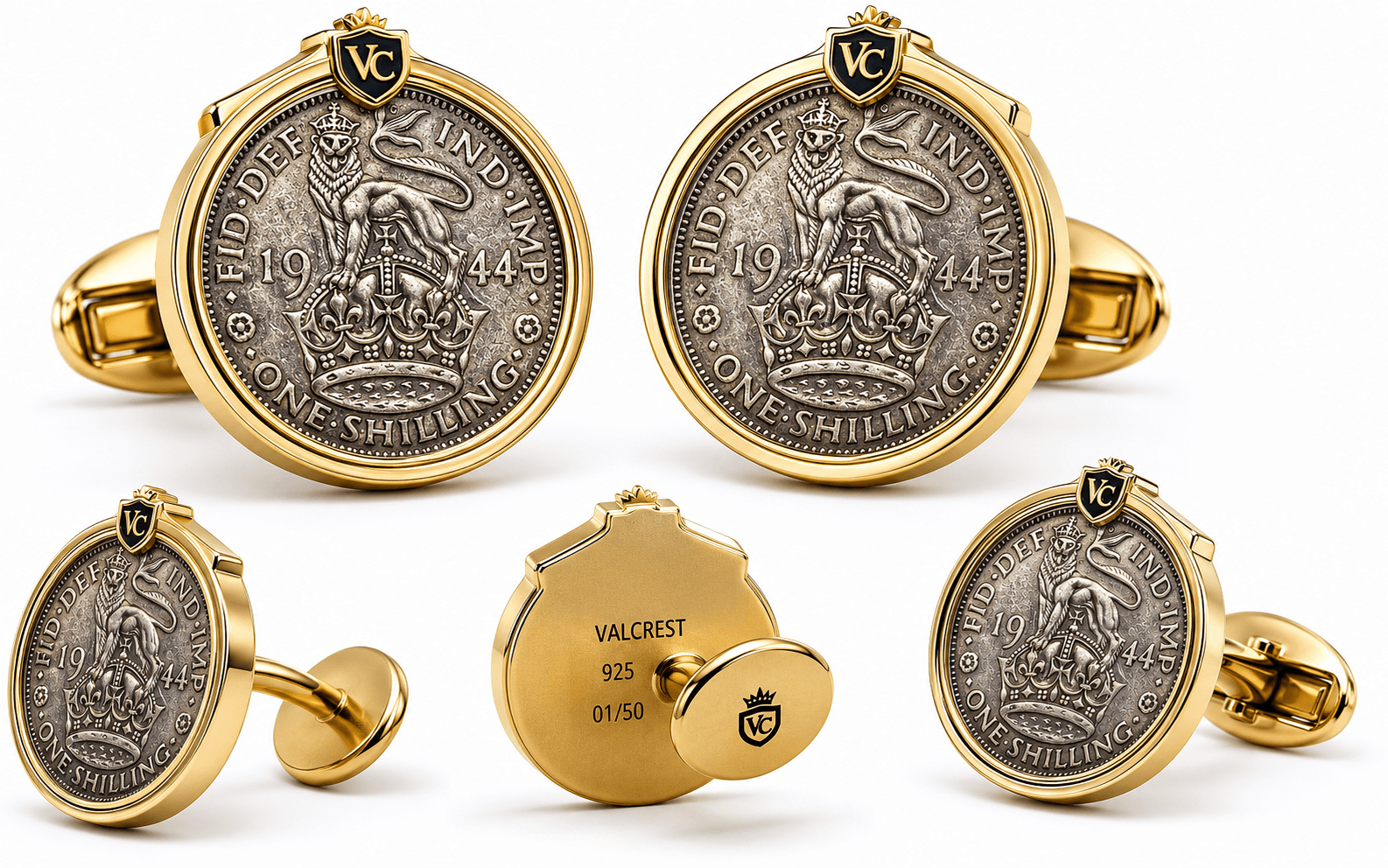
Our Executive Crown Sterling Silver Cufflinks are made from polished sterling silver with a signature crown design. The Heritage British Shilling Cufflinks feature vintage silver British shillings in sterling silver bezels with an 18k gold vermeil finish.
Shop the Collection
Frequently Asked Questions
How do you shine silver cufflinks safely?
Start with a soft polishing cloth and dry, gentle buffing, which removes light tarnish without abrasion. If the tarnish is heavier, use a small amount of mild cleaner on a cloth rather than dipping the cufflinks. Avoid soaking pieces with enamel, gemstones or mixed materials, and never scrub the posts or hinges, since they can bend or loosen. Dry each cufflink completely before storing it.
Is baking soda safe for cleaning silver cufflinks?
A baking soda paste can lift stubborn tarnish on solid silver, but it is mildly abrasive and can leave fine scratches on polished surfaces. Apply a small amount with a soft cloth or soft toothbrush, rub lightly, then rinse thoroughly and dry. Skip this method for vermeil, plated pieces, enamel or any cufflink with glued stones, because moisture and friction can damage the finish or the bond.
Does vinegar clean tarnished silver cufflinks?
White vinegar can remove tarnish, but its acidity can also dull finishes and affect glued components, so it is a poor choice for cufflinks with mixed materials. If you use it, dilute it, limit contact time, and rinse and dry immediately. For most VALCREST pieces, a dry polishing cloth or a gentle silver-specific cleaner is the safer first step.
How do you clean silver cufflinks without polishing them?
Light tarnish often responds to a soft microfiber cloth alone, used in a gentle back-and-forth motion. For grime in recesses, dampen a soft brush with lukewarm water and a drop of mild soap, then rinse and dry completely. This preserves the surface and avoids the abrasion of repeated polishing, which is useful for pieces you clean often.