 How-to
How to Judge Whether Stainless Steel Cufflinks Are Durable
Last Updated: November 25, 2026
Quick Summary
Stainless steel cufflinks can be durable for daily wear because the base metal resists rust well. Their weak points are scratches, finish wear on plated surfaces, and the post or hinge mechanism, so check those before buying.
- Stainless steel resists rust because its chromium forms a thin protective oxide layer.
- Plated finishes can wear through with use, so ask whether the piece is solid or plated.
- Grade 316L handles chlorides better than 304, which helps near pools and at the coast.
- Check the post, toggle or clutch for looseness before buying, since mechanical parts can weaken.
- Rinse after swimming or saltwater exposure and dry the post and hinge thoroughly.
Table of Contents
- Are Stainless Steel Cufflinks Durable Enough for Daily Wear?
- Does Stainless Steel Tarnish, and What Actually Causes It?
- Stainless Steel vs Sterling Silver Cufflinks: Which Holds Up Better?
- Grades, Finishes and Weak Points to Check Before You Buy
- How to Clean and Care for Stainless Steel Cufflinks
- How Long Does Stainless Steel Jewelry Last in Practice?
- Choosing Cufflinks That Will Last With VALCREST™
- Frequently Asked Questions
Are Stainless Steel Cufflinks Durable Enough for Daily Wear?
Are stainless steel cufflinks durable? Stainless steel can hold up well for everyday wear, though its limits lie in scratches, finish wear and the hinge or post mechanism, not in the base metal itself.
Stainless steel is an alloy of iron, chromium and usually nickel. The chromium forms a thin, invisible oxide layer that protects the metal from moisture and air. That layer is why stainless steel resists the rust that affects plain steel.
At VALCREST™, our cufflinks are built from sterling silver and vermeil. The questions below apply to any metal, and this guide will help you judge any pair you consider.
What durability actually means for cufflinks
Durability for cufflinks covers four things: how the metal resists corrosion, how the finish resists wear, how the mechanical parts hold up, and how the piece keeps its appearance over years. A cufflink can be rust-proof and still scratch easily. It can look perfect and still have a weak post.
Check each of these before you buy:
- Corrosion resistance: Does the metal resist moisture, sweat and cleaning products?
- Finish durability: Is the surface plated, coated or solid? Thin plating wears through faster.
- Mechanical strength: Do the back, hinge and post bend or snap under pressure?
- Shape retention: Does the piece keep its form after repeated wear and removal?
Ask the seller whether the piece is solid or plated, and which stainless steel grade it uses. A clear answer is a good sign.
Pros and cons of stainless steel at a glance
Pros
- Resists rust and tarnish better than plain steel or many plated metals
- Affordable compared with solid precious metals
- Handles regular wear with little special care
- Keeps a clean, modern look for years
Cons
- Scratches show more on polished surfaces
- Plated finishes can wear through with use
- Mechanical parts such as posts and hinges can weaken over time
- Less traditional prestige than sterling silver or gold for formal heirloom pieces
Does Stainless Steel Tarnish, and What Actually Causes It?
Stainless steel does not tarnish in the way silver does. Tarnish is a surface reaction with sulfur compounds in the air, which turns silver dark and dull.
Discoloration can still happen. Common causes include:
- Chloride exposure: Chlorine in pools and salt in seawater can pit the surface over time.
- Harsh chemicals: Bleach and strong cleaners can dull or stain the finish.
- Sweat and skin oils: Residue left on the surface can cause a dull film if it sits for long periods.
- Low-grade alloys: Cheaper stainless steel contains less chromium and resists corrosion less well.
Watch out: if a pair you own develops rust spots, the metal is likely a low-grade alloy or a plated base beneath the surface, and the damage may not be reversible.
Stainless Steel vs Sterling Silver Cufflinks: Which Holds Up Better?
For resistance to everyday corrosion, stainless steel usually holds up better than sterling silver. Sterling silver tarnishes when exposed to air and sulfur, and it needs regular attention to stay bright.
Sterling silver has its own strengths. It is a precious metal, it carries traditional prestige, and it can be engraved or refinished. It also softens over time, so thin pieces can bend more easily than a solid stainless steel back.
Sterling silver asks for more polishing but suits formal and heirloom pieces. For a fuller breakdown of cost, care and longevity, see Sterling Silver vs Vermeil for Accessories.
Grades, Finishes and Weak Points to Check Before You Buy
Not all stainless steel is equal, and the grade and finish tell you more about real-world durability than the word "stainless" on the label. The two grades most common in jewelry and accessories are 304 and 316L.
Grade 304 typically contains roughly 18 percent chromium and 8 percent nickel. That chromium content is what forms the passive oxide layer that resists rust. Grade 316L adds molybdenum, usually around 2 to 3 percent, which improves resistance to chlorides, the compounds in pool water, seawater, and road salt. The "L" stands for low carbon, which reduces the risk of carbide precipitation during welding and lowers the chance of corrosion at joint seams. For cufflinks worn near pools, at the coast, or in heavy sweat, 316L is the more forgiving choice. For office and occasional formal wear, 304 is usually adequate.
Nickel content matters for two reasons. First, nickel is part of what makes the alloy corrosion-resistant. Second, nickel is the most common metal allergen.
Finish is the second half of the durability story, and it is where most stainless steel cufflinks actually fail.
- Unplated, polished or brushed steel: The surface is the metal itself. Scratches show, especially on high-polish faces, but there is no coating to wear through. A light scuff can often be blended out with a jeweler's cloth.
- Ion-plated or PVD-coated finishes: These add color, black, gold tone, gunmetal, through a thin deposited layer. The coating is harder than paint but still finite. It wears first at high-contact edges: the rim of the face, the post, and the toggle.
- Electroplated finishes: Thinner and generally less durable than PVD. Expect color wear at edges within a few years of regular use, sooner with daily wear.
- Inlaid or enameled faces: The inlay can chip or lift if the piece is dropped or struck. The steel body survives; the decorative surface may not.
Now the mechanical parts, which is where a rust-proof cufflink can still let you down. A cufflink has several small joints, and each has a characteristic failure mode:
- The post and toggle (or clutch): The post is the stem that passes through the buttonhole; the toggle or clutch is what holds it. A toggle that swivels loosely can slip out of the buttonhole. A clutch with a weak spring loses grip over time. Test the closure before buying, it should snap or seat firmly, not wobble.
- The hinge: On hinged-back styles, the hinge pin takes repeated stress every time you open and close it. A smooth, slightly stiff hinge is better than a loose one; looseness is the early sign of wear.
- Soldered or welded joints: Where the post meets the face, a poor solder joint can fail under sideways pressure, catching the cufflink on a sleeve or bag strap. Look for clean, continuous joins with no gaps or discoloration.
- Swivel mechanisms: On some toggle styles, the swivel is a small riveted or pinned connection. It is the most common point of looseness after years of use.
Realistic expectations matter. Stainless steel resists rust and corrosion well, but it is not scratch-proof. Keys, watch bands, desk edges, and pocket change will leave fine scuffs on a polished face over months of wear.
Before you buy, ask the seller four questions: Which grade is it (304 or 316L)? Is the finish solid, plated, or coated? How is the post attached to the face? And what is the return policy if a joint fails? A seller who can answer all four is usually selling a piece built to last.
How to Clean and Care for Stainless Steel Cufflinks
After everyday wear. Sweat is mildly acidic and carries salts and skin oils.
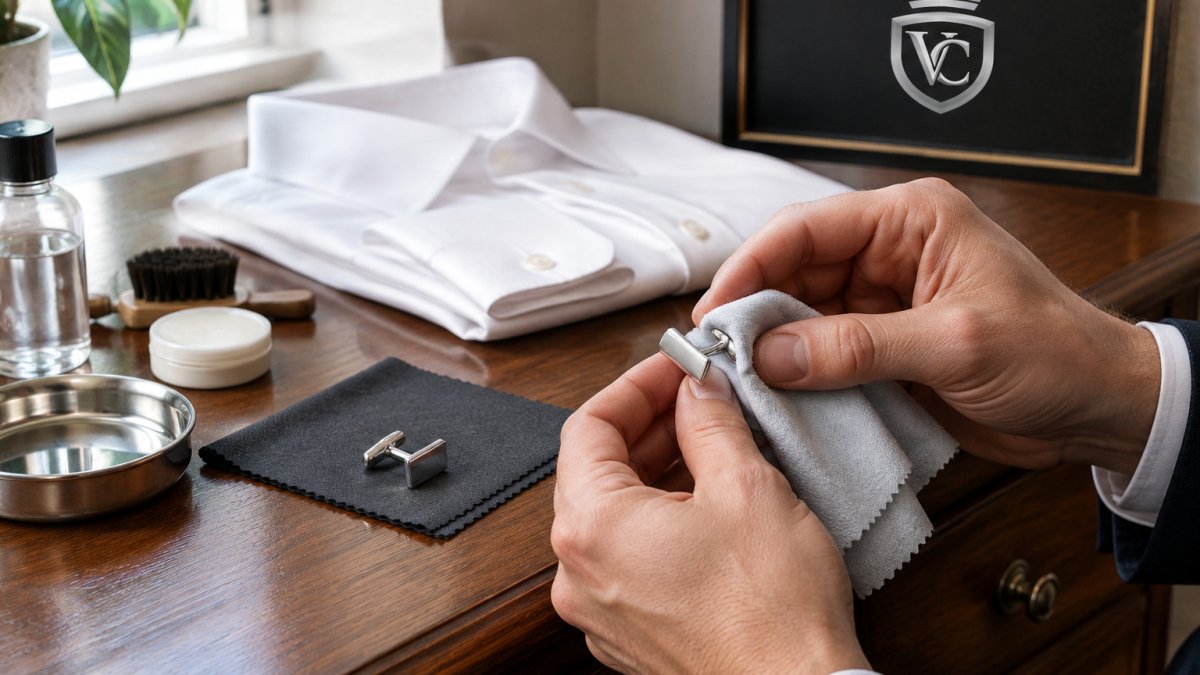
After swimming or saltwater exposure. Chlorine and salt are the two most aggressive common exposures for stainless steel. Grade 316L handles them better than 304, but neither is immune with prolonged contact. Rinse the cufflinks in fresh, lukewarm water immediately after exposure, then dry them thoroughly with a soft cloth, including the post, toggle, and hinge.
When you see residue or dullness. Wash with a drop of mild dish soap in warm water, using your fingers or a soft cloth.
What to avoid.
- Bleach and chlorine-based cleaners: These can pit stainless steel, especially at seams and joints. Keep cufflinks away from bathroom and kitchen cleaning.
- Abrasive polishes and toothpaste: They scratch polished faces and wear through thin plating.
- Ultrasonic cleaners: Fine for solid unplated steel, risky for plated, enameled, or glued assemblies, where vibration can loosen inlays or coatings.
- Prolonged soaking: Water trapped in a hinge or behind a toggle can cause problems over time. Clean, rinse, and dry, don't soak.
Storage. Store cufflinks separately in a soft pouch or a lined compartment.
Skin sensitivity. Nickel is present in most stainless steel alloys, including 304 and 316L.
A monthly check. Once a month, open and close the hinge or toggle a few times and feel for looseness.
The conditions that most often dull or pit stainless steel are predictable, so a short care routine covers most of them.
| Exposure or task | What to do | Why it matters |
|---|---|---|
| Everyday sweat | Wipe with a soft microfiber cloth | Sweat residue dries into a dull film |
| Pool or seawater | Rinse in fresh lukewarm water, dry thoroughly | Chlorine and salt are aggressive exposures |
| Residue or dullness | Wash with mild dish soap and warm water | Avoids removing the finish |
| Bleach or chlorine cleaners | Keep cufflinks away from them | Can pit stainless steel at seams and joints |
| Abrasive polish or toothpaste | Do not use | Scratches polished faces and wears plating |
| Ultrasonic cleaner | Only for solid unplated steel | Vibration can loosen inlays or coatings |
| Storage | Keep in a soft pouch or lined compartment | Metal-on-metal contact causes scratches |
| Monthly check | Open and close hinge or toggle, check for looseness | Catches worn joints early |
How Long Does Stainless Steel Jewelry Last in Practice?
Expect these patterns:
- Solid stainless steel: Long service life with occasional surface scuffs.
- Plated stainless steel: Finish can wear through within a few years, especially at the edges.
- Mechanical parts: Posts and clutches last as long as their construction allows, so check them before buying.
Check the warranty and return policy before you buy. Ask the seller how the piece is finished and what care they recommend.
Choosing Cufflinks That Will Last With VALCREST™
If you want cufflinks built to last, start by deciding what matters most to you: rust resistance, tradition or heirloom value. Stainless steel suits people who want low-maintenance pieces for regular wear.
At VALCREST™, our cufflinks are made from sterling silver and vermeil. Explore the full range at the collection page and browse sterling silver options if you want to compare materials side by side.
For a quick guide to making a decision, read our advice on polishing silver cufflinks before you buy, or review our buying guide to choose a pair that suits your wardrobe.
Best for: Men who want a clean, modern look for daily wear and minimal upkeep.
Skip if: You want an heirloom piece with traditional prestige and do not mind regular polishing.
Frequently Asked Questions
Do stainless steel cufflinks scratch or dent?
Yes, they can. Stainless steel is hard and resists rust well, but its surface can pick up fine scratches from keys, watch cases, desk edges and rough fabric over time. Store cufflinks in a separate compartment or a soft pouch to keep wear to a minimum.
Does stainless steel turn skin green?
Stainless steel rarely causes skin discoloration, but skin reactions are possible. Some people are sensitive to nickel, which is sometimes present in stainless steel alloys, and may develop redness or itching where the metal touches skin. Green marks are more often associated with copper or brass, which can react with sweat and body chemistry. If you have sensitive skin, keep cufflinks dry and wipe them after wearing.
How should you clean stainless steel cufflinks?
Wipe them with a soft microfiber cloth after each wear to remove sweat and oils. For deeper cleaning, use warm water with a few drops of mild dish soap, rinse thoroughly and dry completely. Avoid chlorine bleach and harsh abrasives on any plated or vermeil pieces. Remove cufflinks before swimming in chlorinated pools or saltwater, and before using cleaning chemicals.
Is it true that stainless steel doesn't tarnish?
Stainless steel does not tarnish in the way silver does, but it can still show discoloration, water spots or surface staining if exposed to harsh chemicals, chlorine or prolonged moisture.