 Ultimate guide
How to Choose Gold Tone Cufflinks for Formal Shirts
Last Updated: November 10, 2026
Quick Summary
Gold tone cufflinks are finished in a gold-colored metal, usually a base alloy or stainless steel, so the color is the finish rather than real gold content. For formal shirts, pick a yellow, white, or rose tone to match your other accessories, and choose a polished face for formal events or a brushed face for daily business wear.
- Gold tone describes appearance, not precious metal, so check what lies beneath the finish.
- Yellow gold tone suits traditional black-tie looks; white gold tone suits white shirts and silver watches.
- Round or square faces suit weddings; knot or rope-textured faces suit business dress.
- Confirm your shirt has French cuffs and that its buttonholes fit the cufflink's post before buying.
- Store cufflinks in a dry, lined box and clean them with a soft dry cloth after each wear.
Table of Contents
- What Gold Tone Cufflinks Are and How They Differ From Gold Plated and Solid Gold
- Gold Tone Finishes Across Yellow, White, and Rose Metal Tones
- Matching Gold Tone Cufflinks to Formal, Dress, and Wedding Shirts
- How to Wear Cufflinks With French Cuffs
- Sterling Silver vs Gold Tone Accessories: Materials, Durability, and Value
- Best Practices for Cufflink Maintenance and Finish Longevity
- Choosing Your Next Pair: Size, Style, and Where to Shop VALCREST™
- Frequently Asked Questions
What Gold Tone Cufflinks Are and How They Differ From Gold Plated and Solid Gold
Gold tone cufflinks are cufflinks finished in a gold-colored metal, typically a base alloy or stainless steel with a gold-colored surface. The term describes appearance, not precious metal content, which is why the label matters when you compare prices. A gold tone piece can look warm and polished on the cuff while containing no gold at all.
That distinction is easy to miss. Gold plated, gold filled, and solid gold are different construction methods with different value and wear characteristics. A gold tone finish sits on the surface of a base metal, so the color depends on the finish staying intact over time. For a shopper comparing options, the key question is what sits underneath the finish and how it was applied.
For formal shirts, gold tone cufflinks offer a warm metal color. Pricing depends on the construction and finish, so check the product listing or request a quote for current prices. Read the product description carefully to confirm which construction the listing describes before you buy.
Gold Tone Finishes Across Yellow, White, and Rose Metal Tones
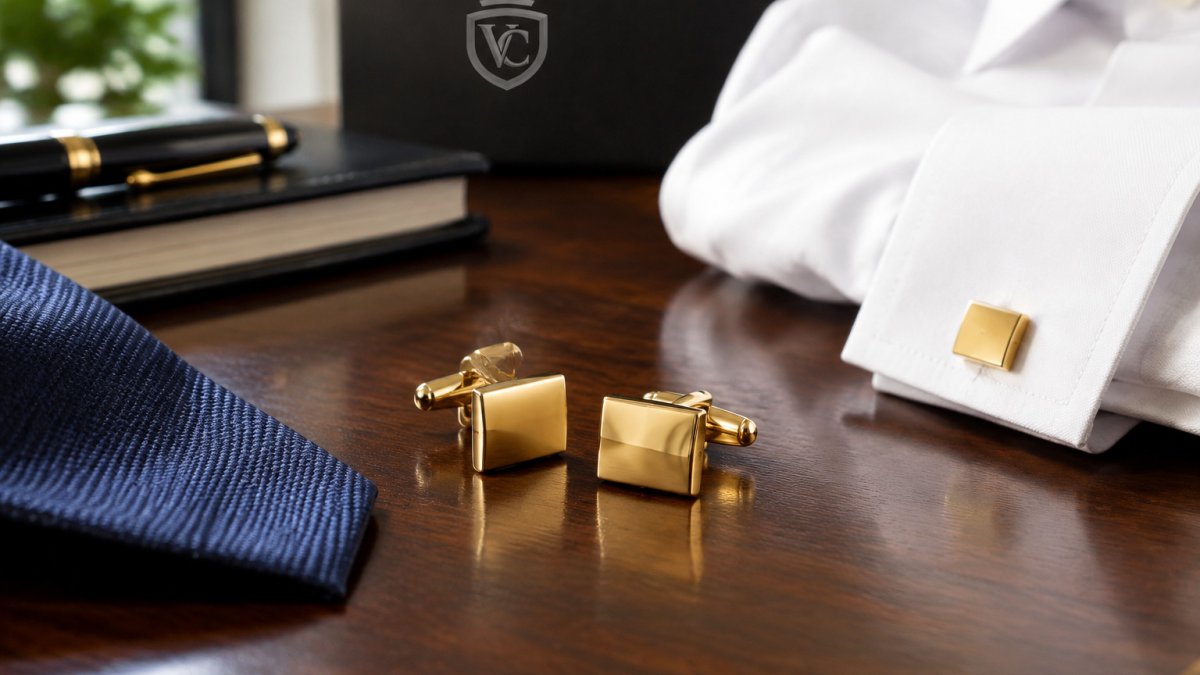
Gold tone cufflinks come in several metal tones. Yellow gold tone is the classic choice and reads as traditional under a dinner jacket. White gold tone is cooler and pairs well with white dress shirts and silver watches. Rose gold tone is softer and warmer, a good fit for shirts in pale blue or ivory.
Match the tone to the rest of your accessories. If your watch, belt buckle, or tie bar is yellow gold, a yellow gold tone cufflink keeps the look consistent. Mixed metals can work, but they should be intentional, not accidental.
Finish also affects the look. A polished face reflects light and suits formal events. A textured or brushed face hides small scratches and suits everyday business wear.
Matching Gold Tone Cufflinks to Formal, Dress, and Wedding Shirts
Gold tone cufflinks are versatile, but the pairing changes with the shirt, the suit, and the occasion. A few concrete combinations cover most formal wardrobes:
Black tie and weddings. A crisp white dress shirt with a spread or wing collar is the standard canvas. Pair it with a polished yellow gold tone cufflink in a round or square face, and keep the rest of the accessories in the same metal family: a yellow gold tone tie bar or stud set, a watch with a gold-tone case, and a black or midnight blue tuxedo. For a summer or daytime wedding, a pale ivory or light blue shirt with rose gold tone cufflinks reads warmer and less severe than yellow gold.
Business and professional dress. A light blue or white pinpoint oxford shirt with a navy or charcoal suit is the workhorse combination. A knot or rope-textured gold tone cufflink adds detail without drawing attention, and a brushed or satin finish hides scratches from daily desk wear better than a mirror polish.
Business casual and smart-casual. A striped or checked dress shirt in blue, pink, or lavender pairs well with a smaller gold tone cufflink, roughly 15 to 18 mm across the face, so it does not overpower a softer collar. White gold tone is the safer choice here because it reads cooler against pastel shirts and blends with a steel watch.
Evening and formal events. A white shirt with a dark suit and a polished gold tone cufflink in a slim rectangular or oval shape suits galas and formal dinners. Save bold stones, heavy textures, and oversized faces for less formal settings, where they read as personality rather than protocol.
Match the tone to the rest of your accessories. If your watch, belt buckle, or tie bar is yellow gold, a yellow gold tone cufflink keeps the look consistent. Mixed metals can work, but they should be intentional, not accidental: a silver watch with gold tone cufflinks is fine if the belt buckle or tie bar echoes the gold.
When in doubt, aim for one restrained detail. The cufflink should be noticed only when the wearer moves his cuff into view.
The article pairs each occasion with a shirt, cufflink style and size, as summarised below.
| Occasion | Shirt and cufflink pairing | Note |
|---|---|---|
| Black tie and weddings | White dress shirt with polished yellow gold tone cufflink | Keep other accessories in the same metal family |
| Summer or daytime wedding | Ivory or light blue shirt with rose gold tone cufflinks | Warmer and less severe than yellow gold |
| Business and professional dress | Light blue or white pinpoint oxford with knot or rope-textured cufflink | Brushed or satin finish hides desk-wear scratches |
| Business casual | Striped or checked shirt with cufflink about 15 to 18 mm | Smaller size avoids overpowering a softer collar |
| Evening and formal events | White shirt with slim rectangular or oval polished cufflink | Save bold stones and oversized faces for less formal settings |
How to Wear Cufflinks With French Cuffs
French cuffs, also called double cuffs, fold back on themselves and fasten with cufflinks rather than buttons. Before you buy, confirm that your shirt has French cuffs. Most cufflinks fit any double cuff, but the shirt's buttonholes must be wide enough for the cufflink's post or toggle to pass through. A common pattern is to test the fit with a single cufflink before committing to a full set, since a tight buttonhole can make a thick post frustrating to seat. Once the cufflink fits comfortably, its finish and construction can help determine whether it suits the shirt, and GRISÉ NYC's quality guide offers a useful next step for assessing gold jewelry.
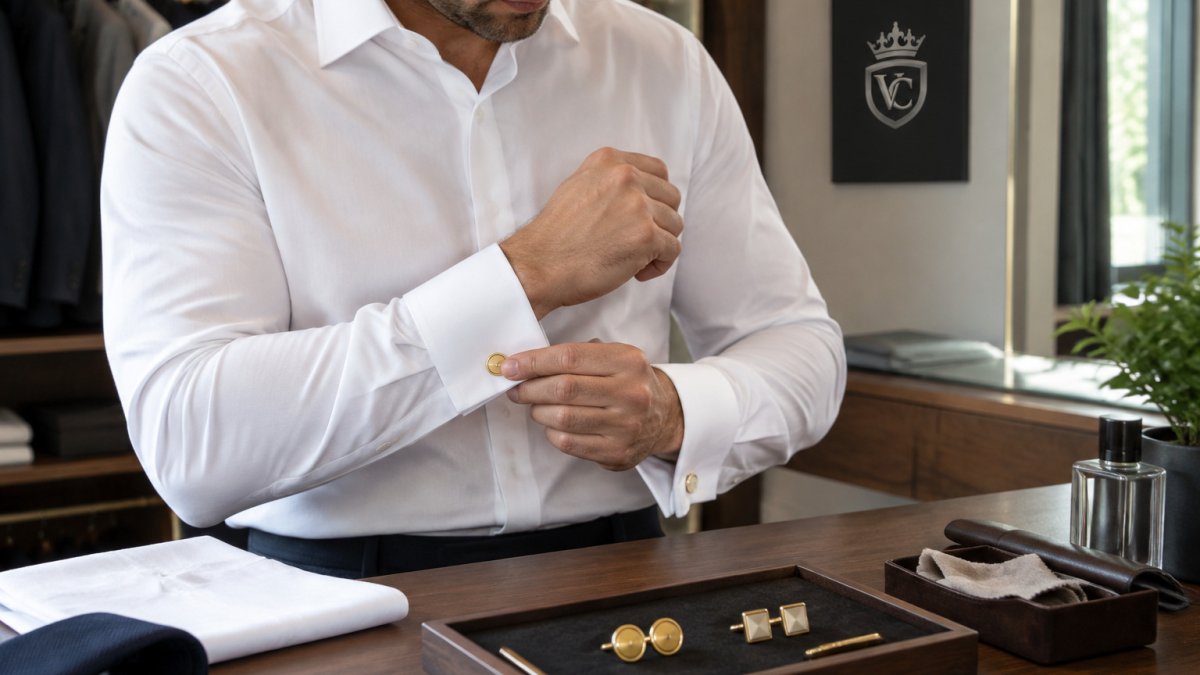
The fastener on the back of the cufflink determines how it goes on and how secure it feels. The four common types behave differently:
- Bullet back (also called torpedo back): A straight post with a cylindrical toggle that swivels into line with the post to pass through the buttonholes, then rotates perpendicular to lock. It is the most common mechanism on dress cufflinks because it is quick to fasten one-handed and sits flat against the cuff.
- Whale back: A hinged toggle that folds flat for insertion and springs open behind the cuff. It holds securely and is easy to fasten, but the hinge is a wear point and can loosen with heavy use.
- Chain back: Two decorative faces joined by a short chain, with no rigid post. It suits soft or loosely woven cuffs and vintage-style designs, but the chain can catch on fabric and offers less precise alignment.
- Fixed back (also called button or stud back): A solid post with a fixed rear disc. It is the most secure and the simplest to manufacture, but it requires buttonholes wide enough to pass the rear disc and is slower to put on.
To fasten any of them, fold the cuff back and align the two buttonholes. Pass the cufflink through both holes, then secure it with the back fastening. Check that the cufflink lies flat and that both sides of the cuff sit evenly. With a bullet back, rotate the toggle until it sits crosswise behind the cuff; with a whale back, let the hinge open fully so the rear face rests against the fabric.
Sleeve length matters too. The shirt cuff should extend about a half inch past your suit jacket sleeve, so the cufflink shows when you move your arm. Watch out: if the cuff opening is too loose, the cufflink will hang rather than sit flat, and the face will tilt away from view.
If you wear cufflinks often, a bullet-back pair is the most forgiving for daily fastening, while a fixed-back pair is the most secure for black-tie wear where you will not remove the cufflinks during the evening.
Sterling Silver vs Gold Tone Accessories: Materials, Durability, and Value
Sterling silver is a precious metal alloy, while gold tone is a finish applied to base metal. The two behave differently over time. Sterling silver tarnishes gradually and can be polished back to shine. Gold tone finishes can wear through at contact points, especially on the back of a cufflink where it touches the shirt fabric.
Vermeil, a sterling silver base with a thick gold layer, sits between the two. It offers a gold look with a more substantial base than standard gold plating. If you are weighing VALCREST™ pieces, the brand's sterling silver and vermeil options are described on its website. Compare the material listed on each product to decide which fits your budget and wear pattern.
For an everyday cufflink, a durable base and a clear finish description matter more than the color alone. Check the listed material before comparing prices.
Best Practices for Cufflink Maintenance and Finish Longevity
Store cufflinks in a dry, lined box or pouch, separated from other metals to prevent scratching. Avoid storing them loose in a jewelry dish where they can knock against each other.
Clean gold tone cufflinks with a soft, dry cloth after each wear. Avoid harsh chemical dips, abrasive polishes, and ultrasonic cleaners, which can strip the finish. Remove cufflinks before showering, swimming, or applying perfume and lotion.
For sterling silver and vermeil, a dedicated silver polishing cloth removes light tarnish. Use it gently and follow the product instructions. Regular, light care preserves the finish far better than occasional aggressive cleaning.
Choosing Your Next Pair: Size, Style, and Where to Shop VALCREST™
Choose cufflink size by proportion. A cufflink that is too large overwhelms a slim wrist, while one that is too small disappears against a broad cuff. Measure the cuff opening and the thickness of your shirt fabric before buying, and check the listed dimensions on each product.
Choose style by occasion. Keep one polished pair for formal events and one textured pair for business wear. A third pair in a different metal tone adds versatility as your wardrobe grows.
To explore the range, visit the VALCREST™ website and compare the materials, finishes, and dimensions listed on each product page. For current prices and availability, check the product listings directly.
Gold tone cufflinks give a formal shirt a warm, polished finish when they suit the occasion and the cuff. Compare the construction, finish, and size of each option before you buy. Browse the VALCREST™ collection to find the pair that fits your shirts and your next event.
Frequently Asked Questions
What is the difference between gold tone and solid gold cufflinks?
Gold tone cufflinks have a gold-colored finish applied over a base metal such as brass, stainless steel, or an alloy. Solid gold cufflinks are made of gold throughout, and their karat marking, such as 14K or 18K, indicates the purity. Gold tone pieces look similar at a glance and cost far less, but the finish can wear thin over time. Check the product listing for the stated metal and finish before buying, and look for a karat stamp if you want true gold content.
Are gold tone cufflinks appropriate for black tie events?
Yes. Gold tone cufflinks are widely worn with black tie attire when they are simple and understated. Choose a polished or lightly textured round or bar design in a warm yellow tone, and keep the size modest so it sits neatly in the cuff. Pair them with a white pleated or plain front dress shirt and black studs or buttons on the shirt bosom, so the metal tones coordinate.
Do gold tone cufflinks tarnish over time?
Gold tone finishes can dull, discolor, or wear through the plating with regular friction and exposure to moisture, perfume, and sweat. Store them in a dry pouch or box, wipe them with a soft cloth after wearing, and avoid harsh polishing compounds. Finish life depends on the thickness of the plating and how often they are worn, so ask the seller about the finish specification before purchase.