 ultimate-guide
Suit with Cufflinks: A 2026 Guide to French Cuffs
Table of Contents
- The Role of Cufflinks in Professional Attire
- The Anatomy of a French Cuff Dress Shirt
- How to Attach Cufflinks: A Step-by-Step Guide
- Cufflink Etiquette for Business and Formal Events
- Matching Cufflinks with Suit Colors and Metals
- Cufflink Maintenance, Storage, and Investment Value
- Frequently Asked Questions
Last Updated: September 30, 2026
The Role of Cufflinks in Professional Attire
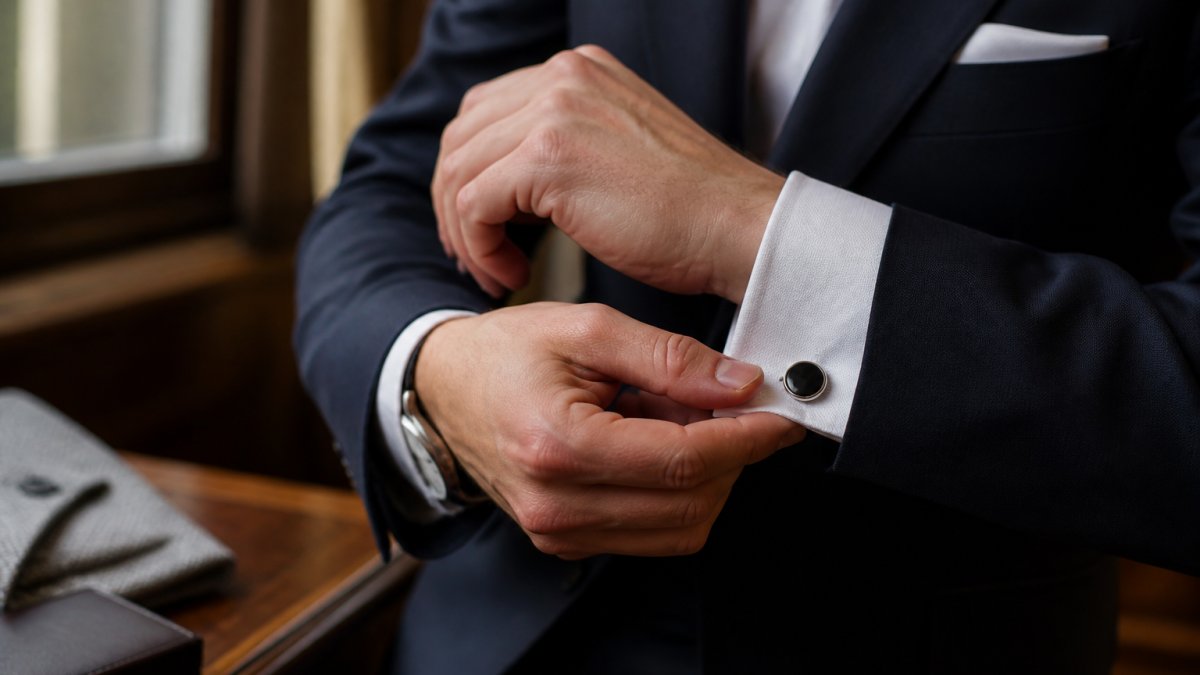
A suit with cufflinks signals deliberate preparation. In rooms where authority is read in seconds, the flash of metal at the wrist reads as discipline, not decoration. This guide from VALCREST™ covers how to wear that detail correctly, from shirt anatomy to boardroom etiquette.
The Anatomy of a French Cuff Dress Shirt
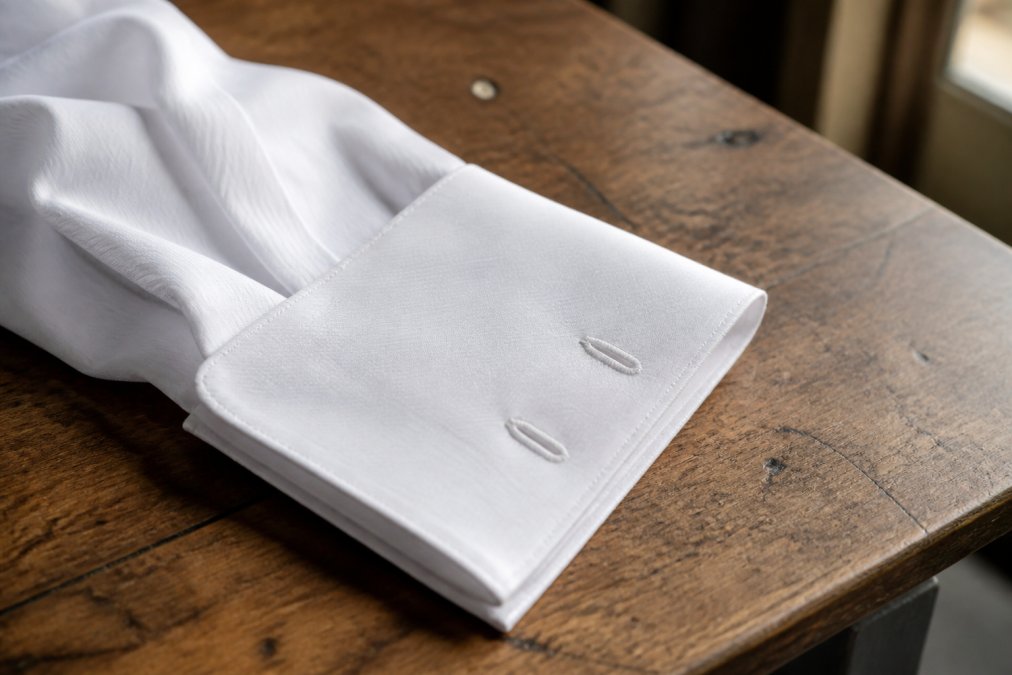
A french cuff dress shirt ends in a folded-back cuff, roughly twice the depth of a standard cuff, with buttonholes on both sides but no buttons. The two sides are joined by a cufflink rather than a button.
Details worth knowing before you buy:
- Cuff depth: Traditionally around 3 inches folded, though slimmer cuts run closer to 2.5 inches.
- Buttonholes: Four per cuff on most shirts, two on each side, aligned so the cufflink passes through both layers.
- Sleeve length: The cuff should end where the wrist meets the hand, showing roughly half an inch of cuff beyond the jacket sleeve.
- Fabric: Twill and poplin hold a crisp cuff edge better than softer weaves.
- Collar pairing: A spread collar balances the formality of a French cuff; a button-down collar fights it.
Double-Cuff vs. Barrel Cuff: What Works with Cufflinks
Barrel cuffs, the standard single-fold cuff with a button, cannot take cufflinks, only double cuffs can.
How to Attach Cufflinks: A Step-by-Step Guide
Attaching cufflinks takes about fifteen seconds per wrist once you know the sequence: fold, align, insert, rotate.
The three fastening mechanisms you will actually encounter
Every cufflink falls into one of three mechanical families:
- Bullet back (also called a toggle back). A straight post with a cylindrical toggle on a hinge. Insert the post through the buttonholes, then rotate the toggle a quarter turn so it sits perpendicular and locks the cuff closed. This is the most common mechanism on modern cufflinks and the easiest to fasten one-handed.
- Whale back. A curved, fixed post shaped like a whale's tail. It does not rotate or hinge, you angle it through the buttonholes and let the curve hold the cuff. Whale backs are traditional on heirloom cufflinks and the hardest to fasten without looking, because there is no locking action to confirm the cuff is secure.
- Chain link (also called a bean or chain back). Two decorative faces joined by a short chain or a pair of bean-shaped links. There is no post, the chain passes through the buttonholes and the two faces sit on either side of the cuff. Chain links are the most forgiving on fabric because they do not pinch, but they can slip out of a loose buttonhole.
The step-by-step sequence
- Fold the cuff back. The French cuff folds outward on itself, creating two layers of fabric with the buttonholes stacked.
- Align the buttonholes. Line up the holes on both sides so you can see straight through all four.
- Insert the post (or chain). For a bullet back or whale back, push the post through the aligned holes from the inside of the wrist outward. For a chain link, pass the chain through and let the faces settle on either side.
- Rotate to lock (bullet back only). Turn the toggle a quarter turn so it sits perpendicular to the buttonhole. Whale backs and chain links have no locking step, the shape of the mechanism holds the cuff.
- Check the tension. The cuff should sit snug but allow a finger's width of movement. Too tight restricts the wrist; too loose and the cufflink will rotate out.
Why the mechanism matters more than the design
A cufflink's design is what people see; its mechanism determines whether you actually wear it. A bullet back with a properly engineered hinge survives years of daily use; a cheap crimped toggle bends within months and starts dropping cuffs mid-meeting. At the same price, a plain design with a solid bullet back outlasts an ornate design with a glued fitting every time.
Cufflink Etiquette for Business and Formal Events
Cufflink etiquette comes down to one principle: the cufflink should be the quietest interesting thing you are wearing. Anything drawing a second look in a meeting is doing the opposite of its job.
Reading the dress code before you reach for the cufflinks
Most invitations and workplace policies name a dress code, and each maps to a specific cufflink decision:
- Business formal (suits required, ties expected): Sterling silver or white metal in a simple geometric, knot, or disc design. No gemstones, no novelty shapes, no visible branding. This is the one setting where cufflinks are effectively expected, not optional.
- Business professional (suits, ties optional): Cufflinks are appropriate but not required. A plain silver pair reads correctly; anything with color or shine reads as trying too hard.
- Business casual (no suit, no tie): Cufflinks are usually out of place. If the room is not wearing ties, the wrist hardware is the loudest thing at the table.
- Cocktail / semi-formal: A wider range opens up, enamel, subtle color, mixed metals. Still no novelty shapes.
- Black tie: A tuxedo shirt takes studs down the front and cufflinks at the wrist. Match the metal of the studs to the metal of the cufflinks. This is the one setting where matching is correct rather than fussy.
- White tie: The most formal register. Plain, unadorned, typically white metal or a single dark stone. Anything decorative is wrong here.
The rules that hold across settings
A few rules survive every dress code:
- Match the metal to the studs, not to the watch. In black tie, cufflinks and studs should share a finish. In business settings, the watch band is a separate decision, do not force them to agree.
- One statement per outfit. If the tie, pocket square, and cufflinks are all patterned, the eye has nowhere to rest. Pick one point of interest and let the rest be quiet.
- Daytime favors matte; evening favors polish. A brushed or matte finish reads more appropriate in daylight than a high polish. High polish belongs after dark.
- Novelty shapes are for costume, not for a suit. Dice, flags, cartoon characters, and sports logos are conversation pieces, not accessories. They belong on a casual shirt, if anywhere.
- When in doubt, follow the host's register. If the invitation is ambiguous, the safest read is the one the host is likely to be wearing.
Cultural and industry contexts
Expectations shift by industry and family tradition, even when unwritten. In law, finance, and government, cufflinks signal seriousness, a plain silver pair is rarely wrong. In creative fields and tech, they read as overdressed unless the rest of the outfit supports them. At formal family ceremonies, some traditions expect them; others find them ostentatious. The rule that travels: match the formality of the room, not of your closet.
Matching Cufflinks with Suit Colors and Metals
Matching cufflinks to a suit is a question of temperature and contrast, not strict coordination. Silver tones sit cool, gold tones warm; the suit and shirt set the palette, and the cufflink either follows it or deliberately breaks it.
| Suit Color | Recommended Metal | Why It Works |
|---|---|---|
| Charcoal or black | Sterling silver | Cool metal against a cool neutral reads sharp |
| Navy | Silver or gold | Navy accepts both; silver is safer for business |
| Mid-gray | Silver | Keeps the palette restrained |
| Brown or tan | Gold or gold-plated | Warm metal against a warm neutral |
| Olive or green | Gold or vermeil | Gold lifts the muted base |
| Burgundy or oxblood | Gold | Avoids clashing with the red undertone |
Silver vs. Gold: Choosing the Right Finish
Choose silver for business, gold for warmth, and vermeil for the look of gold on a sterling silver foundation.
Cufflink Maintenance, Storage, and Investment Value
- Wipe each cufflink with a soft cloth after wearing to remove skin oils.
- Store pairs in a lined box or individual pouches so they do not scratch each other.
- Keep silver in a tarnish-resistant pouch or an airtight compartment.
- Polish sterling silver with a silver cloth only when dull, not on a schedule.
- Never store cufflinks loose in a drawer with keys, coins, or other metal.
VALCREST™ crafts its cufflinks in sterling silver and vermeil, drawing on classic menswear and heritage craftsmanship to ensure timeless sophistication. Designed to endure for generations, each piece serves as a quiet symbol of personal standard.
Frequently Asked Questions
Is it appropriate to wear cufflinks with a suit?
Yes, cufflinks are appropriate with a suit when the shirt has French cuffs. A suit with cufflinks signals formality and attention to detail, making it ideal for business formal settings, weddings, and evening events. For business casual environments, stick to understated designs in silver or matte finishes. The key is ensuring your shirt cuff is designed for cufflinks, as standard barrel cuffs cannot accommodate them.
Can you wear cufflinks with a barrel cuff shirt?
No. Barrel cuffs have pre-sewn buttons and cannot accept cufflinks. Only French cuff (double-cuff) shirts have the four-buttonhole design required for cufflinks. If you want to wear cufflinks, you must choose a french cuff dress shirt. Some convertible cuffs exist, but they are rare and less refined. Check your shirt's cuff style before purchasing cufflinks.
What are the etiquette rules for wearing cufflinks in business?
Cufflink etiquette for business favors restraint. Choose silver, gold-plated, or matte finishes over gemstone or novelty designs. Avoid cufflinks in strictly casual offices. For boardrooms, client meetings, and formal presentations, a suit with cufflinks in a simple geometric or knot design projects authority without distraction.
How do I choose the right cufflink material for my suit?
Sterling silver pairs with cool-toned suits like navy, charcoal, and gray. Gold-plated or vermeil works with warmer tones like brown, olive, and tan. For versatility, sterling silver is the safest investment. Consider your shirt's color palette and contrast: silver stands out on white shirts, while gold complements cream and blue. Always prioritize solid construction over plating for longevity.