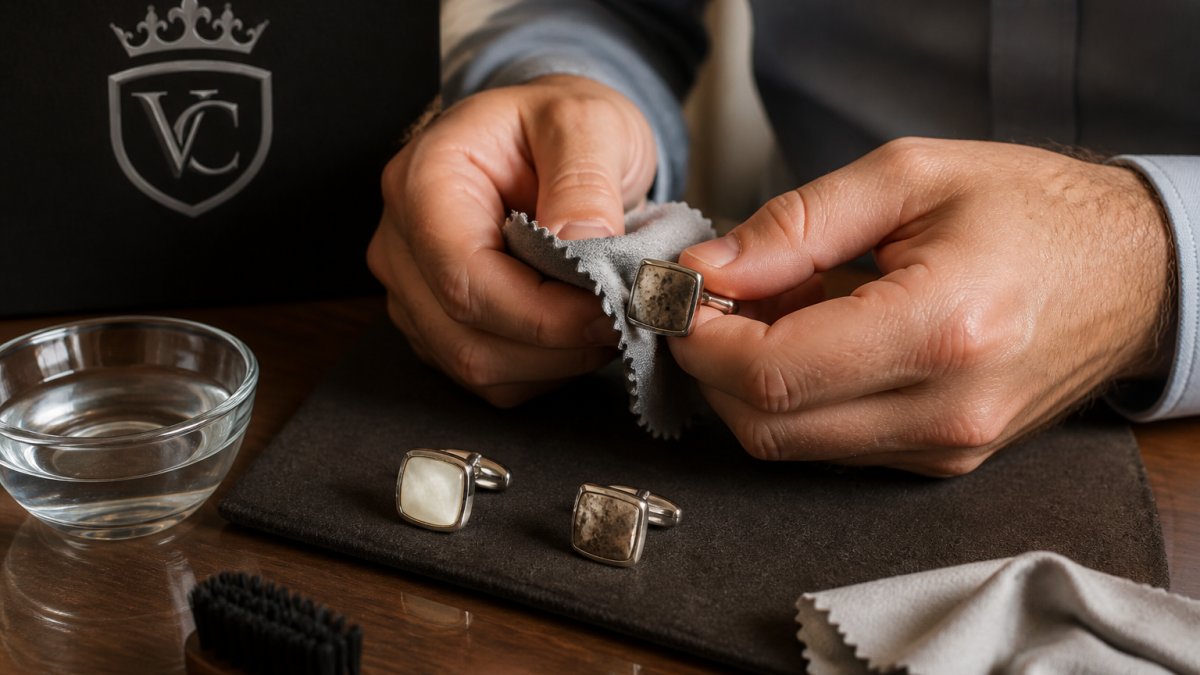
 how-to
Do Luxury Cufflinks Tarnish Over Time
Table of Contents
- Do Luxury Cufflinks Tarnish Over Time
- Sterling Silver Cufflinks Tarnish: What Actually Causes It
- Vermeil Cufflinks Care: Plating Wear vs. Tarnish
- How to Clean Sterling Silver Cufflinks Without Damage
- How to Store Cufflinks to Prevent Tarnish and Scratches
- Identifying Your Cufflink Metal and Finish
- Making the Investment Last: Realistic Durability Expectations
- Frequently Asked Questions
Last Updated: October 5, 2026
Do Luxury Cufflinks Tarnish Over Time
Yes, luxury cufflinks tarnish over time. The question is which materials tarnish fastest and how to slow it. At VALCREST™, we craft cufflinks from sterling silver and vermeil, materials that require understanding to last generations.
Sterling silver tarnishes, it's chemistry, not a flaw. When silver meets oxygen and sulfur compounds in the air, silver sulfide forms on the surface. Vermeil faces a different challenge: the gold plating wears away, revealing sterling silver beneath, which then tarnishes.
The real issue most people miss: tarnish isn't damage. It's a surface reaction, and it can be cleaned. Know your metal, store properly, and clean safely, your cufflinks will outlast you.
Sterling Silver Cufflinks Tarnish: What Actually Causes It
Sterling silver cufflinks tarnish because of a chemical reaction between silver and sulfur compounds in the environment. Pure silver doesn't tarnish; the copper in the alloy reacts. Sterling silver is 92.5% silver and 7.5% other metals, usually copper, which oxidizes when exposed to air, moisture, and sulfur.
Tarnish accelerates in certain conditions:
- Humidity and moisture, Water speeds oxidation; bathrooms and humid climates are ideal for tarnish.
- Air exposure, The longer cufflinks sit exposed, the faster they tarnish; sealed storage slows this.
- Sweat and body oils, Salt and acids from skin accelerate tarnishing.
- Proximity to sulfur sources, Wool, rubber, and certain foods release sulfur compounds that speed tarnish.
- Temperature fluctuations, Heating and cooling cycles create condensation inside storage boxes, accelerating oxidation.
The key insight: tarnish is predictable. You can't stop it entirely, but you can control the rate. A sterling silver cufflink stored in a dry, sealed environment tarnishes far more slowly than one left on a dresser.
Vermeil Cufflinks Care: Plating Wear vs. Tarnish
Vermeil is sterling silver coated with a thick layer of gold plating, not solid gold. The gold layer protects the silver underneath until it wears through.
Problem 1: Tarnish (removable).
Tarnish is a surface reaction. On vermeil, it appears as dark spots, gray film, or yellow-brown discoloration on exposed silver, usually at edges, the post, or the toggle where the gold has thinned.
Problem 2: Plating wear (not removable).
Plating wear is the physical loss of the gold layer. It looks different from tarnish: the gold becomes dull, patchy, or shifts toward pale yellow or silver-gray in high-friction zones.
Problem 3: Corrosion and base-metal exposure (serious).
If the base metal beneath the plating is not sterling silver, common in inexpensive "gold-plated" cufflinks, exposure produces green or black skin staining, pitting, and a chalky surface. This is corrosion, not tarnish, and it does not clean off.
How to tell them apart in ten seconds:
| What you see | What it is | What to do |
|---|---|---|
| Dark film or spots, uniform across the piece | Tarnish | Gentle clean with the correct method for the metal |
| Dull, patchy gold in high-friction zones | Plating wear | Stop polishing; consider re-plating |
| Green or black skin staining, pitting, chalky surface | Corrosion / base-metal exposure | Retire or re-plate; do not polish |
| Loose stones, bent posts, broken hinges | Mechanical damage | Professional repair |
How long does vermeil plating last?
When to seek professional cleaning or repair:
- The piece is antique, signed, or has sentimental or resale value.
- The cufflink is set with stones, enamel, or intricate filigree.
- The plating is visibly worn and you want the gold restored.
- The post, toggle, or hinge is bent, loose, or broken.
- You see corrosion, pitting, or skin staining.
A jeweler can re-plate vermeil, tighten settings, and replace worn findings. Re-plating costs far less than replacing a quality pair and preserves the original craftsmanship.
How to Clean Sterling Silver Cufflinks Without Damage
Cleaning sterling silver cufflinks safely starts with one rule: match the method to the metal and finish, not to the severity of the tarnish alone. The wrong method can scratch, pit, strip plating, or loosen a stone setting permanently.
Step 1: Identify the metal and finish before you touch it.
- Sterling silver (925 or .925 hallmark): Tarnish-prone but forgiving; surface tarnish is removable.
- Solid gold (10K, 14K, 18K, or 750): Does not tarnish; dullness is surface film or fine scratches.
- Gold vermeil (925 base with thick gold plating): Treat as plated, not solid gold; aggressive polishing wears through the gold.
- Rhodium-plated silver: Extremely tarnish-resistant; clean with a soft cloth only, as abrasives remove the rhodium.
- Gemstone-set cufflinks: The stone dictates the method; many stones (opal, pearl, turquoise, emerald) are damaged by dips, heat, and ultrasonic vibration.
Step 2: Match the method to the piece.
| Piece | Safe method | Avoid |
|---|---|---|
| Sterling silver, light tarnish | Silver polishing cloth, gentle circular motion | Dips, abrasives |
| Sterling silver, heavy tarnish | Baking soda paste or brief silver dip, then rinse and dry | Ultrasonic, bleach, toothpaste |
| Solid gold | Warm water, mild dish soap, soft cloth | Abrasives, chlorine |
| Gold vermeil | Soft dry cloth only; professional cleaning for heavy soil | Polishing cloths, dips, ultrasonic |
| Rhodium-plated silver | Soft dry or slightly damp cloth | Any abrasive or chemical |
| Gemstone-set | Damp soft cloth; professional cleaning for buildup | Dips, ultrasonic, heat |
Safe cleaning methods in detail:
- Soft polishing cloth. A microfiber or treated silver polishing cloth removes light tarnish and fingerprints without chemicals. Use gentle circular motions and stop when the cloth stops pulling dark residue.
- Baking soda paste. Mix baking soda with a few drops of water to a thick paste. Apply with a soft cloth, rub lightly, rinse with distilled water, and dry immediately. For moderate tarnish on sterling silver only.
- Silver dip solution. Commercial dips work in seconds but are harsh. Use only for heavy tarnish on unplated sterling silver. Follow the label exactly, rinse thoroughly, and dry completely. Never use on vermeil, gemstone-set, or antiqued pieces.
- Mild soap and water. Warm water with a drop of dish soap and a soft cloth works on solid gold and sterling silver. Dry immediately with a lint-free cloth.
Methods to avoid:
- Abrasive scrubbing pads or brushes. These scratch the surface permanently and create more places for tarnish to anchor.
- Harsh chemicals or bleach. Chlorine pits silver and gold alloys and can discolor plated finishes.
- Ultrasonic cleaners. Vibration can loosen stone settings and stress plated layers. Avoid unless a jeweler confirms the piece is safe.
- Toothpaste. Despite the myth, toothpaste is too abrasive for fine silver and any plated finish.
- Polishing cloths on vermeil. If the gold layer is thin or already worn, polishing accelerates wear-through.
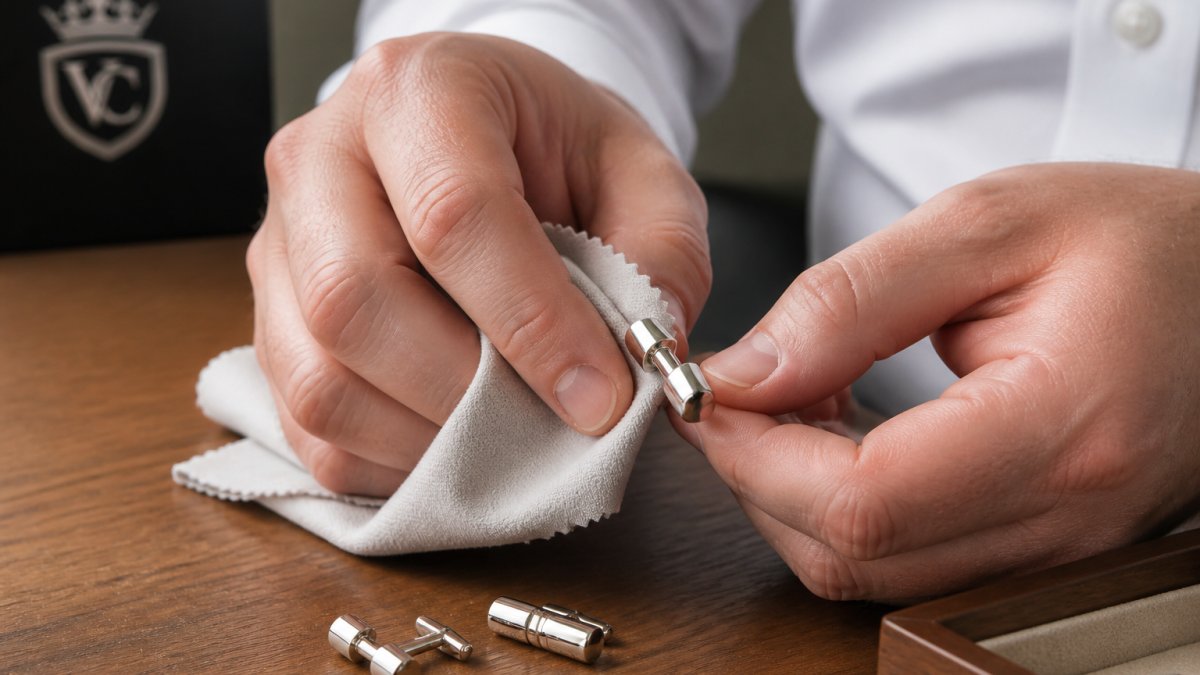
The rule: gentle and minimal. Light tarnish cleaned regularly prevents the need for aggressive methods. If you're unsure what a piece is made of, or it's antique, intricate, or stone-set, take it to a jeweler rather than guessing.
Heritage British Shilling Cufflinks →
How to Store Cufflinks to Prevent Tarnish and Scratches
Storage is where most people fail. Your cufflinks spend 99% of their time in a drawer or box. That's where tarnish happens.
The ideal storage setup:
- Acid-free tissue paper, Wrap each cufflink individually; acid in regular paper accelerates tarnish.
- Sealed plastic bag or airtight container, Removes oxygen and moisture, the two main drivers of tarnishing.
- Cool, dry location, Avoid bathrooms, kitchens, and basements; choose a bedroom closet or drawer.
- Separate compartments, Keep cufflinks apart so they don't scratch each other.
- Silica gel packets, Add these to your storage box to absorb moisture; replace every 6 months.
What not to do:
- Don't store cufflinks in leather cases. Leather contains sulfur compounds that accelerate tarnishing.
- Don't store them in the bathroom. Humidity is the enemy.
- Don't leave them exposed on a dresser. Air exposure drives tarnish formation.
- Don't store them in plastic wrap directly against the metal. Use tissue paper as a buffer.
The difference is dramatic: a cufflink in an airtight, dry environment stays bright for years, while the same cufflink in a humid drawer tarnishes noticeably in weeks.
Identifying Your Cufflink Metal and Finish
Before you clean or store your cufflinks, identify what you have. Different metals require different care.
Sterling silver, Look for a "925" or ".925" hallmark stamped on the back or post, meaning 92.5% pure silver. Sterling silver is relatively soft and tarnishes over time.
Solid gold, Marked as "10K," "14K," "18K," or "750" (European standard). Solid gold doesn't tarnish; it may develop a cosmetic patina that's easily polished. It's significantly more expensive than sterling silver.
Vermeil, Marked as "925 vermeil" or similar, sterling silver with a thick gold plating. The 925 indicates the silver underneath.
Rhodium plating, Some silver cufflinks are rhodium-plated to resist tarnish. Rhodium is a platinum-family metal extremely resistant to oxidation; rhodium-plated cufflinks stay shiny longer but still require storage care.
Finding the hallmark usually requires looking at the back of the cufflink or the post. Use a magnifying glass if needed.
Making the Investment Last: Realistic Durability Expectations
Luxury cufflinks are built to last, but "last" means something different for each material. Set realistic expectations based on what you own.
Sterling silver cufflinks, With proper care and storage, sterling silver cufflinks last indefinitely.
Vermeil cufflinks, The plating lasts 3-5 years with normal wear.
Solid gold cufflinks, Solid gold doesn't tarnish or wear through. It scratches and develops a superficial patina, but can be worn daily for decades without degradation.
Plated cufflinks (thin), These last 1-2 years before plating wears noticeably. Once plating fails, the base metal tarnishes rapidly, not heirloom pieces.
The Heritage British Shilling Cufflinks from VALCREST™, crafted in sterling silver with 18k gold vermeil plating, represent the middle ground.

Luxury cufflinks tarnish because they're made from real materials that react to their environment. This isn't a failure, it's evidence of authenticity.
Start with proper storage: acid-free tissue, sealed containers, dry environments. Clean gently and infrequently. Know your metal so you use the right methods.
Frequently Asked Questions
Does sterling silver tarnish, and how quickly?
Yes, sterling silver tarnishes through oxidation when exposed to air, moisture, and sulfur compounds. The rate depends on humidity and storage conditions. Well-stored sterling silver cufflinks may show minimal tarnish for years, while pieces stored in humid environments can develop visible discoloration within weeks. Regular polishing with a soft cloth slows the process significantly.
Do vermeil cufflinks tarnish or lose their gold finish?
Vermeil cufflinks have a thin gold layer over sterling silver. The gold plating itself doesn't tarnish, but the underlying silver will if the plating wears through from friction or polishing. With careful handling and gentle cleaning, quality vermeil cufflinks like VALCREST™'s Heritage British Shilling Cufflinks maintain their finish for years. Avoid abrasive polishing cloths to protect the plating.
How should cufflinks be stored to prevent tarnishing?
Store cufflinks in a dry, airtight jewelry box or sealed bag with silica gel packets to control humidity. Keep them away from direct sunlight and moisture. Individual cloth pouches prevent scratching between pieces. Avoid storing near bathrooms or basements where humidity fluctuates. This approach dramatically slows oxidation and preserves both shine and plating integrity over time.
Can polishing damage vermeil cufflinks?
Aggressive polishing can wear through the thin gold plating on vermeil pieces, exposing the silver beneath. Use only soft, non-abrasive cloths designed for jewelry, and apply gentle pressure. Specialized silver polishing cloths are safer than general-purpose polishing compounds. For vermeil cufflinks, less frequent, gentler polishing preserves the finish far longer than vigorous cleaning.