 Listicle
What Are the Best Suit Accessories for Men?
Last Updated: November 24, 2026
Quick Summary
The most important suit accessories for men are cufflinks, a tie or bow tie, a pocket square, a belt or suspenders, a watch, and dress shoes. Each should match the suit, the shirt and the occasion, and cufflinks are the accessory most often overlooked.
- Pick one metal family, such as silver or gold, and keep the watch, cufflinks and belt buckle within it.
- Tie width should track lapel width, with 3 to 3.5 inches suiting most business suits.
- A pocket square should show roughly half an inch to an inch of fabric above the breast pocket.
- Match belt and dress shoes in color, so black shoes take a black belt and brown shoes take brown.
- Cufflinks should sit within the cuff, with about half an inch of shirt cuff showing below the jacket sleeve.
Table of Contents
- Which Suit Accessories for Men Matter Most?
- Cufflinks: The Accessory That Signals Attention to Detail
- Ties, Pocket Squares, and Lapel Pins: Matching Suit Colors and Fabrics
- Belts, Suspenders, Watches, and Dress Shoes: Coordinating the Rest of the Outfit
- Suit Accessories for Black Tie and Wedding Occasions
- Fit, Placement, and Common Suit Accessory Mistakes
- Choosing Your First Pair of Suit Accessories
- Frequently Asked Questions
Which Suit Accessories for Men Matter Most?
The most important suit accessories for men are cufflinks, a tie or bow tie, a pocket square, a belt or suspenders, a watch, and dress shoes. Each one signals attention to detail when it is chosen to match the suit and the occasion. Cufflinks are the accessory most often overlooked, and they are where a refined look starts for many men. This guide explains how to choose each one, how to match it to color and fabric, and where many men go wrong.
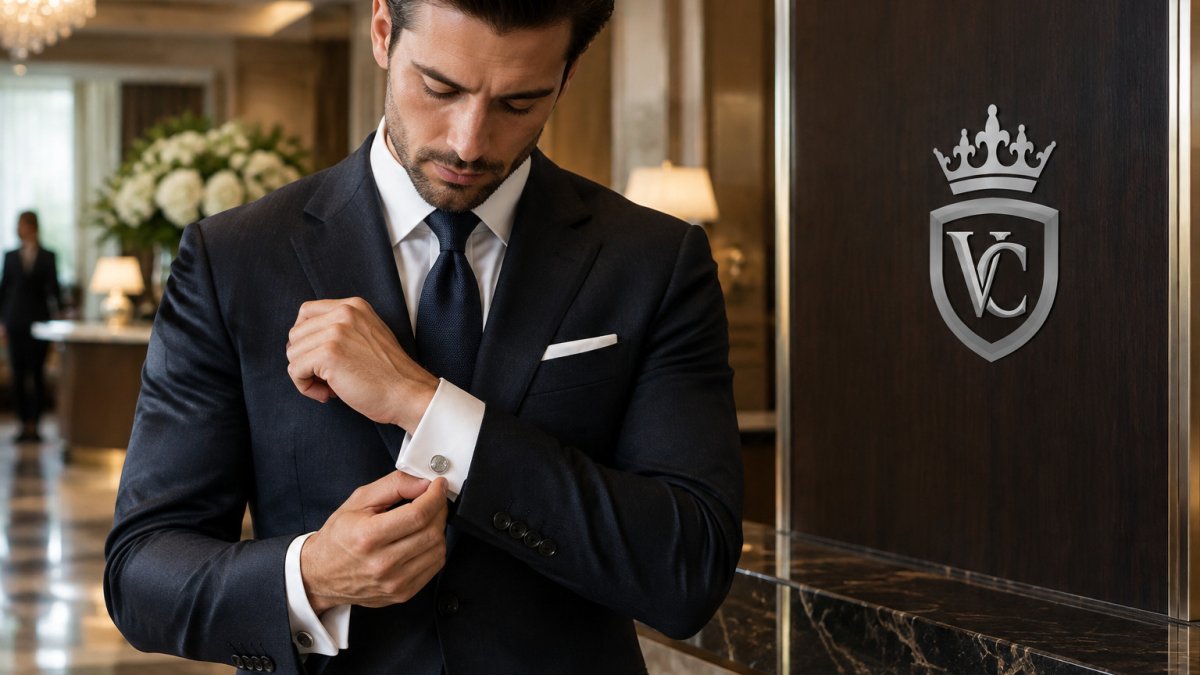
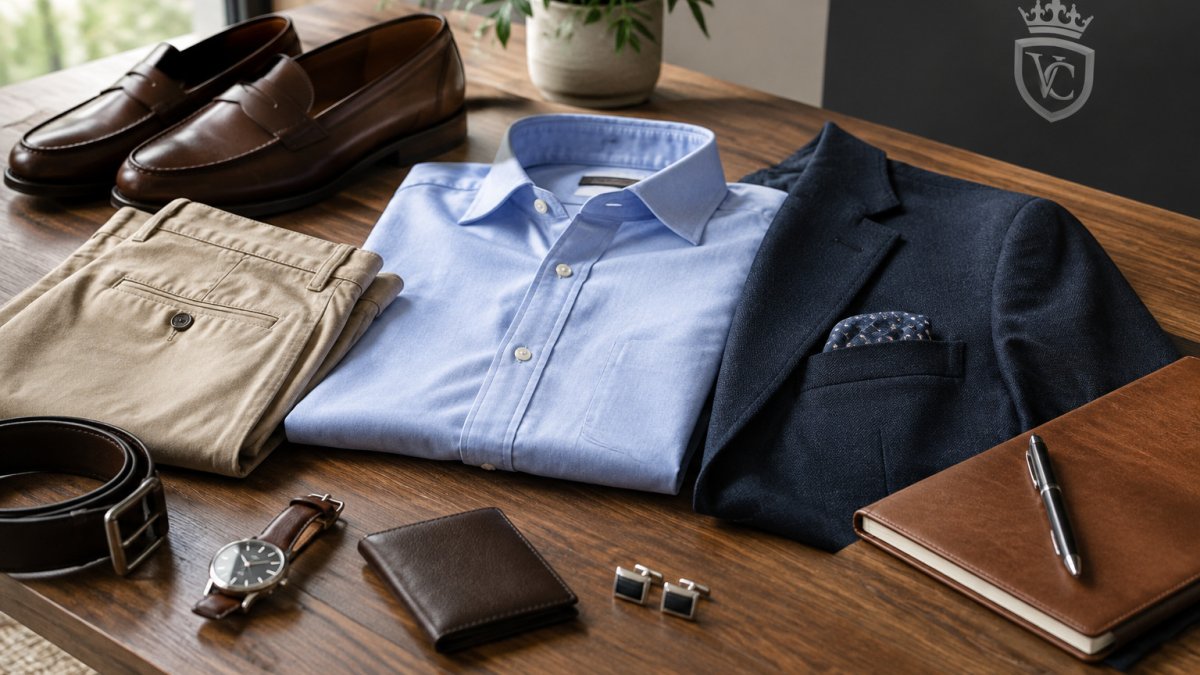
Start with the pieces that show most at close range. Cuffs, collars and lapels sit at eye level in every meeting and photograph. That makes cufflinks, the tie or pocket square, and lapel details the priority. A watch and a good belt come next. Dress shoes complete the outfit, and they should match the belt.
Many men buy accessories in a rush, one at a time, and end up with pieces that do not work together. A better approach is to pick a small core set first. For most professionals, that means one pair of cufflinks in a metal that matches the watch, two or three ties in muted tones, and one pocket square.
Cufflinks: The Accessory That Signals Attention to Detail
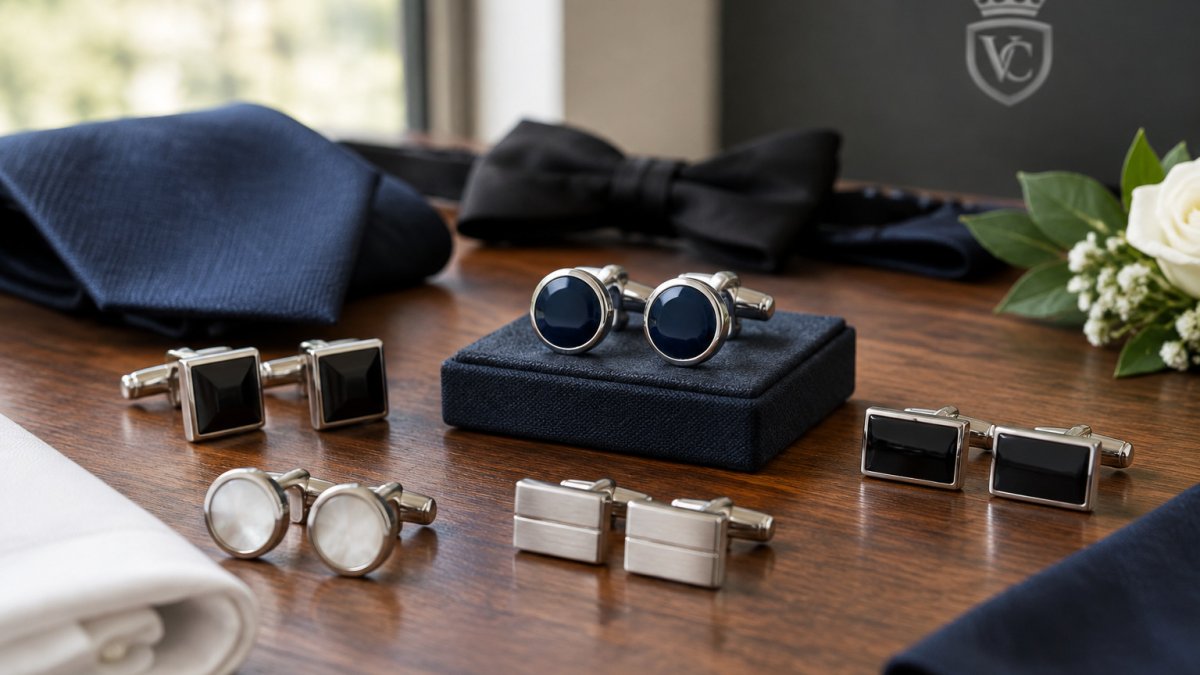
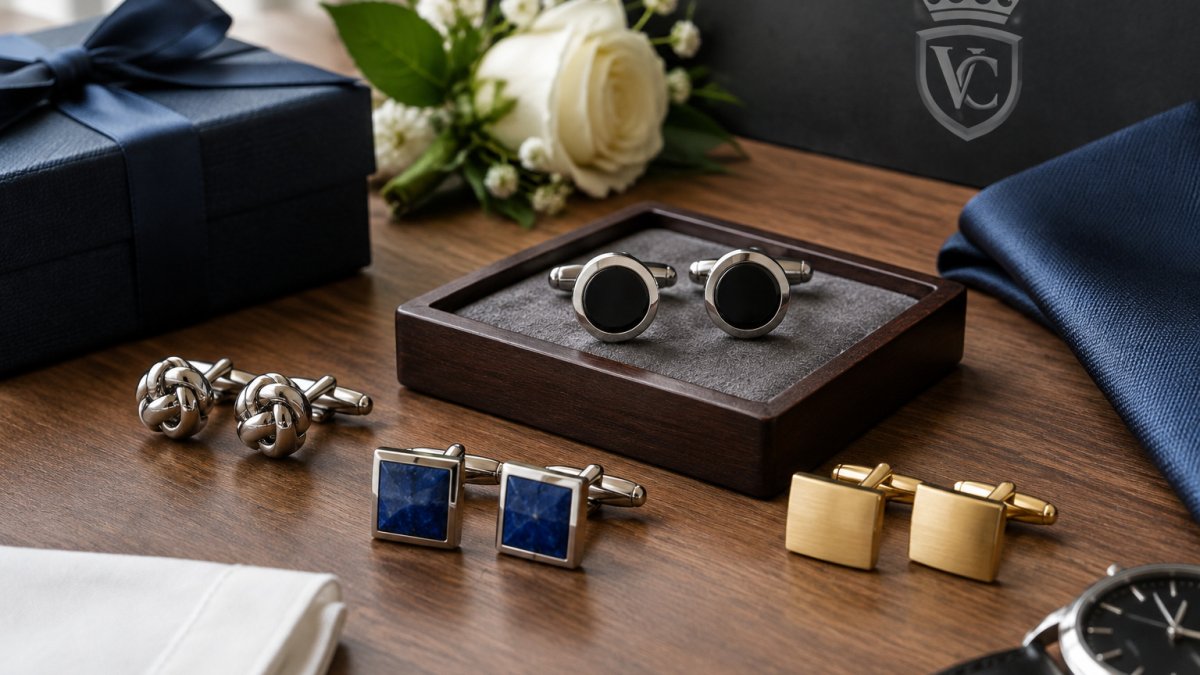
Cufflinks are the most visible sign of a finished shirt. They fasten French-cuff shirts, which are worn in business and formal settings, and they show at the wrist during every handshake and gesture. The metal should match the rest of your accessories. Silver suits a cool palette and a stainless or platinum watch. Gold suits warmer tones and a gold-toned watch.
VALCREST™ makes cufflinks in sterling silver and vermeil. Three pieces from the collection show how the options differ:
- Executive Crown Sterling Silver Cufflinks at $229.00 come in polished sterling silver, with a gold version finished in 18k gold plating. The 16mm face and whale back closure are part of the design.
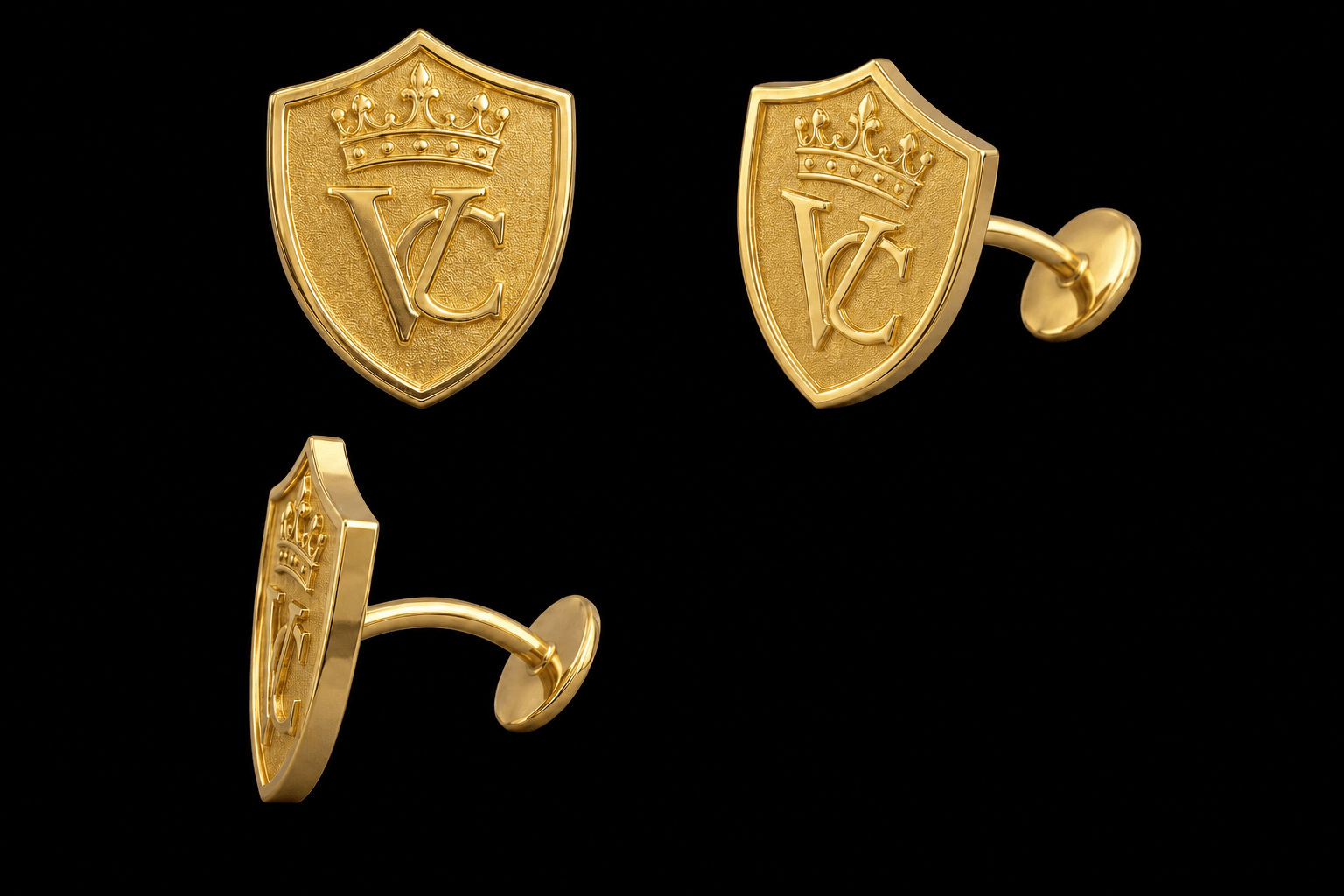
- Founder's Edition Shield Cufflinks at $329.00 use sterling silver with 18k gold vermeil and an architectural shield design, fastened with fixed posts. Each piece is individually numbered and availability is limited.
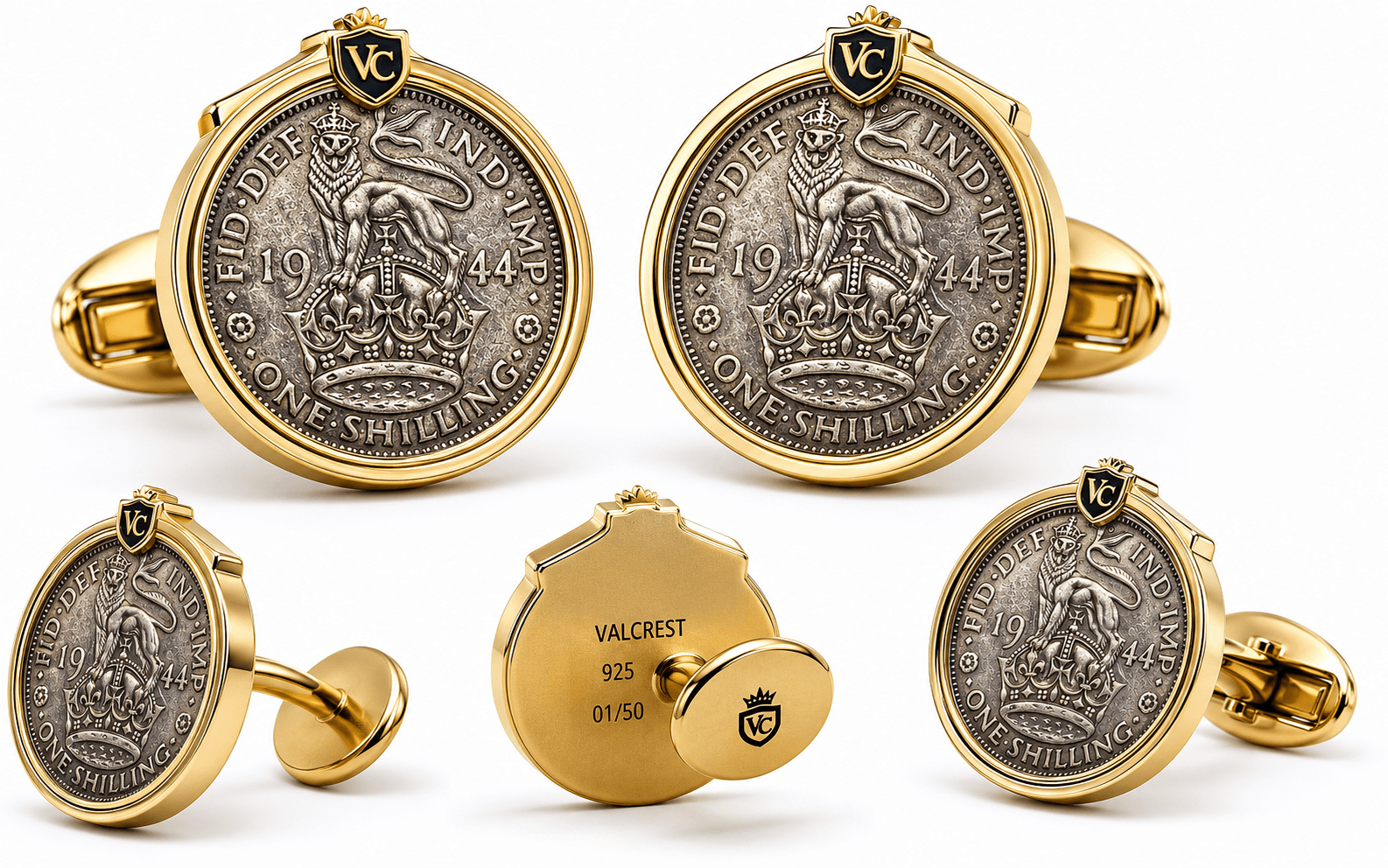
- Heritage British Shilling Cufflinks at $249.00 set authentic vintage silver British shillings in custom sterling silver bezels with an 18k gold vermeil finish. The 26mm face is larger than the other pairs.
For a broader view of how the two fastenings differ, see how to choose cufflinks for a formal suit and cufflinks versus shirt studs for formal dress shirts. Both help you decide before you buy.

Watch out: cufflinks with fixed posts need a shirt with a buttonhole at the cuff. Check the cuff before you buy.
Cufflink prices from VALCREST™
Ties, Pocket Squares, and Lapel Pins: Matching Suit Colors and Fabrics
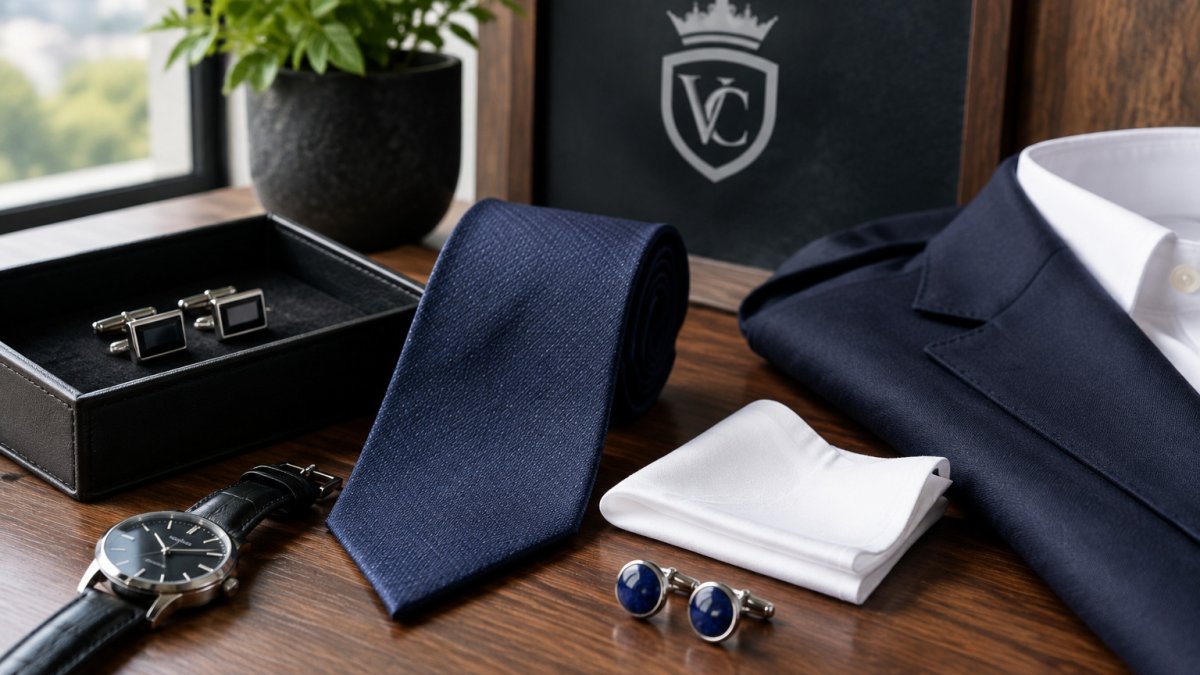
A tie carries the most color in a business outfit, so it should match the suit's weight and the shirt's pattern. Silk ties in solid or subtle textures work with almost any suit. Patterned ties suit solid suits and plain shirts, and should not compete with a patterned shirt.
Tie width should track lapel width, not trend. A common range is 3 to 3.5 inches at the widest point for business suits, with narrower ties (2.5 to 3 inches) suiting slim lapels and trimmer cuts, and wider ties (3.5 to 4 inches) suiting fuller lapels and traditional cuts.
Pocket squares add color near the top of the chest without competing with the tie. Choose a square in a shade that appears somewhere else in the outfit, either in the tie or the lining. Linen and silk each give a different finish. Linen looks relaxed and suits summer.
Lapel pins are a smaller detail. They work best on dark suits and on lapels that lie flat. A lapel pin is most at home in a business or social setting where a small gesture is welcome.
Common suit colors and their best partners:
| Suit Color | Tie | Pocket Square | Metal Tone |
|---|---|---|---|
| Navy | Burgundy, silver, muted blue | White or pale blue | Silver or gold |
| Charcoal | Deep red, navy, grey | Light grey or white | Silver |
| Black | Black, dark grey, silver | White | Silver |
| Grey | Navy, burgundy, plum | Navy or light blue | Silver or gold |
Fabric and season change the formula more than color alone. A lightweight wool or linen-blend suit in summer takes a linen pocket square and a lighter silk tie; a flannel or tweed suit in cold weather takes a wool tie and a textured square.
Watch out: a tie that is too short, too wide for the lapel, or knotted so the dimple is off-center is more noticeable than the pattern itself, so check length and knot in a mirror before leaving.
Belts, Suspenders, Watches, and Dress Shoes: Coordinating the Rest of the Outfit
A belt and dress shoes should match in color and finish. Black shoes take a black belt, and brown shoes take a brown belt. Mismatched leather is one of the most noticed errors in an otherwise careful outfit. Choose a belt with a simple buckle, and wear it only when the trousers have belt loops.
Suspenders are an alternative to a belt and suit only trousers cut to be worn with them. Do not wear suspenders under a suit jacket that will be buttoned. They are visible when the jacket opens, so choose them in a material and color that match the rest of the outfit.
Your watch should suit the setting. A leather-strapped dress watch in a metal that matches your cufflinks looks coordinated. A heavy sport watch looks out of place with a suit. Match the watch strap to the shoes and belt where you can.
Dress shoes finish the look. Polished oxfords or derbies in black or dark brown work with most suits. Keep them clean and well-heeled, since scuffed shoes undo the rest of the outfit.
Suit Accessories for Black Tie and Wedding Occasions
Occasion should drive the accessory set more than personal taste. The same suit can read as an interview, a wedding guest, or a funeral depending on the tie, pocket square, and metal chosen, so build a formula for each setting rather than buying pieces one at a time.
Black tie calls for a dinner jacket, a black bow tie, and a white dress shirt. The bow tie must be self-tied or a well-made pre-tied piece in black silk. Cufflinks should be plain and classic, so a polished silver or gold pair with a simple face is the right choice. The pocket square, if worn, should be white linen or silk, folded simply.
Business and interview settings reward restraint. A solid or subtly textured tie in navy, burgundy, or grey, a white or pale blue shirt, a simple silver or gold cufflink, a matching belt and shoe, and a plain dress watch cover almost every interview. Skip the lapel pin and the pocket square in a first interview unless the company culture is clearly creative; a pocket square is acceptable in many business settings but should be a quiet, solid fold.
Gifts for a wedding, anniversary or milestone are a common reason men buy cufflinks. Heritage British Shilling Cufflinks at $249.00 come with a premium presentation box.
A simple occasion matrix helps decide quickly:
| Occasion | Tie | Pocket Square | Cufflinks | Metal |
|---|---|---|---|---|
| Interview | Solid navy or burgundy | Skip or plain white | Simple silver | Silver |
| Business | Solid or subtle texture | Quiet fold | Simple silver or gold | One family |
| Wedding (day) | Lighter pattern | Linen, colored | Silver or gold | One family |
| Wedding (evening) | Darker silk | Silk, white or accent | Silver or gold | One family |
| Funeral | Black or dark | Skip or white | Minimal | Silver |
| Smart-casual | Optional | Optional | Optional | One family |
Watch out: a bow tie that is not properly fitted looks worse than no tie at all. Practice the tie at home before the event, and check that the knot sits centered and the wings are even.
Fit, Placement, and Common Suit Accessory Mistakes
Fit and placement decide whether an accessory looks deliberate. Cufflinks should sit within the cuff, with the shirt cuff showing about half an inch below the jacket sleeve. The tie should end at or just above the belt buckle. A pocket square should sit at the breast pocket and show only a small fold of fabric.
The most common mistakes are predictable. Wearing too many accessories at once is the first. A tie, a pocket square, a lapel pin, a bold watch and patterned cufflinks together overwhelm the outfit. Choose one or two focal pieces. Mismatched metals are the second. A silver watch with gold cufflinks and a gold belt buckle looks accidental. Pick one metal family and keep to it. Ill-fitting accessories are the third. Oversized cufflinks, loose ties and pocket squares that flop out of the pocket all look careless.
Care and storage extend the life of the set. Store sterling silver away from humidity, and polish it with a soft cloth. Vermeil wears more gently when it is kept dry and away from perfume. Keep the cufflinks in their box when not in use.
Choosing Your First Pair of Suit Accessories
If you are building a set from nothing, start with cufflinks. They are the one accessory that appears in nearly every formal or business situation, and a good pair works with many shirts and suits. Choose a metal that matches your watch and belt buckle. Then add one tie or pocket square in a color that appears in your suit.
Budget matters, but the metal and finish matter more for long-term wear. Sterling silver with a polished finish suits everyday business use at a lower price point, such as the Executive Crown Sterling Silver Cufflinks at $229.00. A gold vermeil piece such as the Founder's Edition at $329.00 suits milestone occasions and a warmer palette.
Consider how often you will wear them. A man who dresses formally most days benefits from a versatile silver pair. A man who wears a suit mainly for weddings and celebrations may prefer a statement piece he can save for those events.
Shop the Executive Crown Sterling Silver Cufflinks, the Founder's Edition Shield Cufflinks, or the Heritage British Shilling Cufflinks at VALCREST™ to begin building a refined, coordinated set.
Frequently Asked Questions
What accessories should a man wear with a suit?
A well-built suit outfit usually includes a belt or suspenders, dress shoes, a watch, and a tie or pocket square. Cufflinks are worn when the shirt has French cuffs, and they are a natural fit for formal and business settings. Keep metals consistent across pieces, so a silver watch pairs with silver cufflinks and a silver tie bar. Choose a small number of accessories and let the suit remain the focal point.
Should men wear cufflinks with a suit?
Cufflinks are worn with shirts that have French cuffs, which fold back and fasten with links instead of buttons. They suit weddings, galas, and business meetings where a refined finish matters. A pair in sterling silver or gold-toned vermeil works with most suit colors, from navy to charcoal. Pairing them with a simple watch and understated tie keeps the look balanced.
How should a tie and pocket square be matched?
A pocket square should complement the tie without copying it exactly. Pick one shared color or a similar tone, and vary the pattern so the two read as deliberate choices. A solid white or ivory square works with almost any tie and suit. Fold the square simply, and keep it slightly lower than the top of the breast pocket for a relaxed, classic appearance.
What suit accessories are best for a black tie event?
Black tie calls for restraint. Choose a black bow tie, a pocket square in white or black silk, and cufflinks in a polished metal such as sterling silver. A leather belt or suspenders in black match the tuxedo, and black dress shoes complete the outfit. Avoid bright colors, novelty patterns, and oversized jewelry, since these undercut the formal tone that black tie requires.